In the UK, £120 a month or £1,400 a year. In the US, US$130 a month or US$1,500 a year, and in the eurozone €130 or €1,500. It's a 12-month term that renews automatically unless you cancel at least 60 days before it ends.
Q: What are the requirements to become a HYROX Training Club? A:There are no minimum requirements. HYROX advises having most of its equipment, or alternatives, and space suitable for personal training, open gym or classes.
Q: Do HYROX Training Clubs have to run HYROX classes every day? A:No. You decide which classes you run and when.
Q: Can a CrossFit box become a HYROX Training Club? A:Yes. HYROX says any kind of gym can affiliate. It's a separate affiliation from CrossFit, with its own fee.
Q: Do I need a separate affiliation for each location? A:Yes. Each location affiliates and pays on its own.
Q: What's the difference between a HYROX Training Club and a HYROX Performance Coach? A:A Training Club affiliation is for a gym. Performance Coach affiliation is for an individual coach, and in the UK it costs £90 a month or £1,050 a year.
--- This blog is powered by Superblog. Visit https://superblog.ai to know more. --- ## How to fill your 6am CrossFit class (and stop empty spots) Published: 2026-11-09 Category: Gym Growth & Marketing Category URL: https://www.wodboard.com/blog/category/gym-growth-and-marketing Meta Title: How To Fill Your 6am CrossFit Class Meta Description: Empty spots cost the same as full ones. Waitlists, cancellation windows, booking limits and the attendance data that tells you which classes to cut. URL: https://www.wodboard.com/blog/how-to-fill-your-6am-crossfit-class An empty spot in a class you're already coaching costs exactly the same as a full one. If six classes a day each run two under, that's twelve sessions a day you've paid a coach for and nobody used. The fix is mostly mechanical: an automatic waitlist, a sensible cancellation window, and actually looking at your attendance data. **The waitlist is the whole ball game** Most empty spots aren't caused by low demand. They're caused by a cancellation at 9pm that nobody found out about. An automatic waitlist promotes the next athlete and notifies them the moment someone drops. No coach checking a list at half five in the morning. No message in the group chat asking if anyone fancies 6am. If your waitlist requires a human to do anything, it isn't a waitlist. **Set a cancellation window and enforce it** Two hours before the class is about right for a 6am. Long enough that a waitlisted athlete can realistically get there, short enough that people don't feel locked in. Enforce it automatically. A rule a coach has to remember to apply isn't a rule, it's a favour, and favours get inconsistent fast. Late checkouts close the gap. Set a period before class when cancelling counts as late, and charge for it if you want to. People stop treating a booking as a maybe. **Read the data before you change the timetable** Everyone has an opinion about which class to cut. The booking data has the answer. Look at average attendance per class slot over eight weeks, not two. A 12pm that runs at four people in January and nine in June is a seasonal class, not a dead one. Look at the consistency graph per athlete. The member who's gone from four sessions a week to one hasn't cancelled yet, but they will. That's the conversation to have this week, not next month. Look at which classes your new members book first. That tells you where to put your best coach. **Booking limits stop one member eating the timetable** An unlimited member who books six days out for every slot they might use, then drops three of them, is taking spots from people who'd have turned up. Booking limits cap how many classes a membership can attend each day, week or month. Even on unlimited, a limit of one class a day stops anyone holding two spots on the same morning and dropping one. Restrictions do the related job of keeping a heavy Olympic lifting session closed to someone who hasn't done foundations. ## FAQs Q: How do I stop empty spots in a full CrossFit class? A:Use an automatic waitlist that promotes and notifies the next athlete when someone cancels, and set a cancellation window long enough for them to get there. Manual waitlists don't work because nobody is checking them at 5:30am.
Q: How do I know which classes to cut from my timetable? A:Look at average attendance per slot over at least eight weeks to avoid mistaking seasonal variation for a dead class, and check which slots new members book first.
Q: What's a reasonable cancellation window for a gym class? A:Around two hours before the class start for early sessions. Enforce it automatically rather than leaving it to a coach's discretion.
Q: How do I stop unlimited members booking every class? A:Set a booking limit on the membership. It caps how many classes that membership can attend each day, week or month, so nobody has to police the timetable.
--- This blog is powered by Superblog. Visit https://superblog.ai to know more. --- ## How much should a CrossFit membership cost? What boxes charge, and how to set your price Published: 2026-11-05 Category: Gym Growth & Marketing Category URL: https://www.wodboard.com/blog/category/gym-growth-and-marketing Meta Title: How much should a CrossFit membership cost? Meta Description: What CrossFit memberships cost and how box owners should set prices: break-even maths, unlimited versus capped, class packs, drop-ins and annual rises. URL: https://www.wodboard.com/blog/crossfit-membership-cost A CrossFit membership typically costs a lot. Prices vary with location, class size and what's included. If you're the one setting the price, start from your own break-even, not from what other boxes charge. CrossFit membership pricing starts with your break-even number, not with what the box down the road charges. Add up your fixed monthly costs, decide how many members your space and coaching hours can hold, and work backwards. Benchmarking against a competitor whose rent you've never seen is how boxes end up underpriced. **Start with the maths, not the market** Your fixed monthly costs: rent, rates, insurance, affiliate fee, software, utilities, coaching wages, accounting. Total them. Divide by your realistic member ceiling. Not your dream number. The number your busiest six classes can actually hold without the 6pm turning into a queue for the rig. That gives you the price at which you break even at capacity. Now double it, because you will not be at capacity and you'd like to pay yourself. If the number that comes out is higher than what the box down the road charges, that is information about their business, not about yours. They may be in a cheaper unit, or losing money, or the owner may not be taking a wage. **Unlimited, capped, or class packs** Unlimited is the simplest to sell and the easiest to run. Most members who buy unlimited attend two or three times a week regardless, so you're not usually giving away as much as it feels like. Capped memberships, say three sessions a week, work when your peak classes are genuinely full and you need to protect capacity. They also create admin, because someone has to enforce the cap. Booking limits handle that automatically rather than a coach doing arithmetic at the door. Class packs suit shift workers and people who travel. They're also a retention risk, because a pack with sessions left is a relationship without a renewal date. Drop-ins should be priced high. A drop-in is a visiting athlete, not a trial. Price it at a fifth of your monthly membership and it stops undercutting the thing you actually want people to buy. **The trial that converts** Free trial class, then a paid foundations course, then membership. The paid step matters. People who pay something for foundations turn up to foundations, and people who complete foundations stay. Free two-week trials attract people who wanted two free weeks. **Raising prices on existing members** Do it annually, announce it six weeks out, explain what changed, and don't apologise. The members who leave over a five per cent increase were leaving anyway. Grandfathering founding members permanently sounds generous and becomes a problem at year four when a third of your revenue is priced at 2022 rates. Grandfather for twelve months, then bring them up. ## FAQs Q: How much is a CrossFit membership per month? A:[CLIENT DATA: the same median figure, UK and US.]
Unlimited memberships cost more than capped ones or class packs, and city-centre boxes usually charge more than out-of-town ones.
Q: How much should a CrossFit membership cost? A:It depends entirely on your fixed costs and your capacity. Work out your monthly fixed costs, divide by your realistic member ceiling to get your break-even price per member, then price above that. Benchmarking against another box without knowing their rent is guessing.
Q: How should I price CrossFit drop-ins? A:High. Around a fifth of your monthly membership price. Cheap drop-ins compete with your own memberships.
Q: Should I offer unlimited or capped CrossFit memberships? A:Unlimited is simpler to sell and administer, and most members attend two to three times a week anyway. Cap only when your peak classes are genuinely full and you need to protect capacity, and use automatic booking limits to enforce it rather than manual checks.
Q: How often should a CrossFit box raise prices? A:Annually, with six weeks notice and a clear explanation. Avoid permanent grandfathering, which locks a growing share of revenue at old rates.
--- This blog is powered by Superblog. Visit https://superblog.ai to know more. --- ## Always Firefighting at Your Gym? How to Take Back Your Day Published: 2026-11-04 Category: Gym Growth & Marketing Category URL: https://www.wodboard.com/blog/category/gym-growth-and-marketing Meta Title: How to Stop Firefighting as a Gym Owner Meta Description: Stop spending your day answering everyone else’s messages. Set a reply time, cut interruptions and keep gym chat out of your evenings. URL: https://www.wodboard.com/blog/always-firefighting-at-your-gym  Your alarm goes off before 5 am, and your phone is already on fire. Coaches have been on WhatsApp, a member sent a DM at 11 pm asking to pause their membership, and there’s an email about a broken rower. You haven’t had a coffee yet, and the day already belongs to someone else. Firefighting means spending your time reacting to other people’s requests instead of doing the work that grows your gym. You get out of it by setting your own agenda, and that starts with deciding when you’ll reply. ### **What does firefighting cost a gym owner?** If you don’t organise your time, other people will organise it for you. Nobody does this to be difficult. A coach sends a message, a member sends another, and before long you’re answering 10, 20 or 50 people across work and home. You can’t keep all of them happy, and jumping from one fire to the next leaves no time for the work that moves your business forward. How you spend your time is one of the biggest factors in how far your gym grows. A message asking how often the gym floor gets cleaned deserves an answer. It won’t grow your business, though, and it doesn’t need an answer this minute. ### **How fast do you need to reply?** You can reply much more slowly than you think. Instant messaging has trained people to expect quick replies, so this might come as news: you don’t have to reply instantly, or even quickly. You decide what’s reasonable. For example, tell members they’ll hear back within 24 hours. Then you can deal with all your emails and messages once a day, which is far more efficient than answering each one as it lands. Members often message late in the evening because that’s when they have time to do their own admin. Most of them aren’t expecting a reply five minutes later. The same applies on the gym floor. Members are in their free time, so they don’t always see that you’re at work, and coaches may bring you a problem that’s high on their list and low on yours. Thank them, tell them it’s noted and say when you’ll deal with it. Better still, ask them to email it so nothing gets lost. Expect it to feel uncomfortable at first. People are used to fast replies, and one or two will ask why you haven’t answered after three hours. Explain the new reply time and stick to it. ### **Why does every interruption cost more than you think?** Switching between tasks has a cost. Say you’re writing next week’s programming, a WhatsApp flashes up and you reply to it. When you go back to the programming, you’ve lost your train of thought. Were you planning front squats or back squats? Depending on how complex the task is, it can take several minutes, and sometimes a lot longer, to get back into it. Developers feel this most, which is why WodBoard’s team guards their uninterrupted time closely. Four or five small interruptions a day can add up to an hour of lost time, and you’re more likely to make mistakes when your focus keeps breaking. It also eats into the time you planned. If you set aside two hours for programming and keep stopping to reply, you might look up and find 20 minutes left before your next class, which isn’t long enough to get back into it. The easiest fix is to stop seeing the messages. Turn off every notification except phone calls, and keep your phone face down while you work. Once you’ve seen a notification, your mind has already wandered, even if you don’t open it. Smartwatches are worse. If yours buzzes with admin emails while you’re coaching, the stress builds through the whole class. Taking it off while you’re coaching can fix that. ### **How do you protect time for the work that matters?** Block out time in your diary and do one task at a time until it’s finished. Set up your space so nothing can interrupt you: notifications off, email closed, phone out of sight. Then think about when you do your best work. If you’re a morning person, your sharpest hours might be 7 am to 11 am. Protect those hours for the high-value work that grows your gym, and don’t spend them clearing 50 emails. Low-value admin can wait until later in the day, when your energy has dipped anyway. A set window, such as 4 pm to 5 pm, gives every small task a home without letting it take over your morning. ### **How do you keep work out of your personal life?** Running a gym blurs the line between work and home. Your friends train with you, your family might too, and you want to stay in touch with your regulars. When all of that comes through your personal WhatsApp, it follows you onto the sofa at 9 pm. Keep your personal WhatsApp for friends and family, and move gym chat into your gym management software. WodBoard, for example, pulls your business WhatsApp messages into one place, so they stay at work. A virtual business number linked to your CRM helps too. You can put it on your website and keep your own phone for yourself, without needing a burner phone or a separate gym mobile. Then choose a time to switch off, such as 7 pm, and put work away when it comes round. ### **What counts as urgent?** Decide this in advance, write it down and share it with your coaches and staff. Without a list, everything is urgent to whoever is sending it. At WodBoard, new starters learn on day one that a Slack message can wait up to half a day. Only a short list of serious problems counts as urgent, such as the website going offline, and those get a phone call. A document someone forgot to send doesn’t make the cut. > “Your lack of organisation does not constitute my emergency.” > > George Palmer, WodBoard’s founder For a gym, your list might look like this: - **Urgent, phone straight away:** a coach has fallen off a bike and can’t take the class that starts in an hour. - **Not urgent, message and wait:** rower three needs a new battery in its console. - **Not urgent, reply within your agreed time:** a member doesn’t think the floor was clean enough today. ### **How do you start working to your own agenda?** 1. **Set a reply time.** Decide what’s reasonable, such as within 24 hours, and tell your members and team. 2. **Turn off notifications.** Leave phone calls on, and keep your phone face down while you work. 3. **Block out your best hours.** Use them for high-value work, and move admin to a set window later in the day. 4. **Write your urgent list.** Share it with your coaches, along with how they should reach you when something is urgent. 5. **Separate work and personal messages.** Keep your own WhatsApp for friends and family, and run gym messages through a business number. 6. **Pick a switch-off time.** When it arrives, work is done for the day. Want to stop starting every day on the back foot? Listen to George and Viv break down reply times, context switching, and what counts as urgent on [The Gym Owner’s Manual](https://www.thegymownersmanual.com/) podcast.  ## **Frequently** asked **questions** ### **How quickly** should **a gym owner reply to members?** There’s no fixed rule, so set a reply time that works for you, such as within 24 hours, and tell your members what it is. Deal with messages in one go each day, and ask people to call if something is urgent. ### **What is context** switching **?** It’s moving from one task to another and back again, for example, stopping your programming to answer a message. Each switch costs time as you regain focus, which can take several minutes, and longer for a complex task. ### **How do I** separate **my personal and gym messages?** Keep your personal WhatsApp for friends and family. Run gym messages through your gym software and a virtual business number, and set a time each evening when you stop checking them. If you’d rather not run your gym from your personal WhatsApp, [book a demo](https://www.wodboard.com/book_demo) to see it in action. --- This blog is powered by Superblog. Visit https://superblog.ai to know more. --- ## How to open a CrossFit box: costs, affiliation and the first 90 days Published: 2026-11-03 Category: Gym Growth & Marketing Category URL: https://www.wodboard.com/blog/category/gym-growth-and-marketing Meta Title: How to open a CrossFit Gym: Costs and Steps Meta Description: What it takes to open a CrossFit box: the US$1,000 application fee, the US$2,500 to US$4,500 annual fee, rent, kit and the systems you need on day one. URL: https://www.wodboard.com/blog/how-to-open-a-crossfit-box Opening a CrossFit box means affiliating with CrossFit LLC, which costs a one-off US$1,000 application fee and US$2,500 to US$4,500 a year, depending on where you are, then finding a unit, kitting it out, insuring it and getting enough members through the door to cover rent before your savings run out. The affiliation is the easy part. Everything after it is a small business. **What affiliation actually costs and gets you** CrossFit charges a one-off US$1,000 application fee, which covers reviewing your application, business plan and readiness. The annual affiliate fee is [US$2,500 to US$4,500, depending on your location](https://www.crossfit.com/open-crossfit-gym). There are no royalties or percentage fees, and CrossFit puts the fee at an average of 1.8 per cent of a typical affiliate's revenue. The fee buys the right to use the CrossFit name, which has to appear in your gym's name, plus the affiliate resources: the Playbook, business planning and financial templates, marketing materials, coaching tools and partner discounts. To affiliate, one person on your team needs a CrossFit Level 1 certificate before you open, and you sign the affiliate agreement. You don't need premises to apply, but you do need a plan and a proposed location. CrossFit says the process usually takes two to four weeks, and you can take up to a year. What it doesn't buy is members. The name gets you found by people already looking for a CrossFit gym near them. Everyone else, you have to find yourself. **The costs nobody puts in the spreadsheet** Rent and rates are your biggest fixed cost and the one that decides whether the business works. Work out your break-even member count before you sign anything: monthly fixed costs divided by your intended [membership price](https://www.wodboard.com/blog/crossfit-membership-cost/). If that number is higher than the number of people who currently train with you, don't sign the lease yet. Fit-out is the number that moves most. A second-hand rig, used bumpers and a rubber floor will get you open. New everything will not make you better at coaching. Insurance, a first aid qualification for every coach, and public liability cover are not optional and are cheaper than the alternative. Then the running costs people forget: card processing fees, accounting, website hosting, and software. WodBoard starts at GBP 90 a month for up to 50 athletes, which at 30 members is GBP 3 per member per month. **The systems to have before you open, not after** Most new boxes run their first six months on a spreadsheet, a WhatsApp group and a bank transfer, then spend a painful weekend migrating out of it. Set up properly on day one and you skip that. You need three things working before your first paying member: a way to take recurring payments without chasing anyone, a class timetable people can book from their phone, and somewhere to write and release the WOD. CrossFit gym management software covers all three on one system. The alternative is a booking app, a payment provider, a spreadsheet for programming and a fourth tool for messaging, plus your member data existing in four places and agreeing in none of them. **The first 90 days** Month one is about people, not equipment. Every founding member you personally know is worth ten from a leaflet. Run a free foundations course and be strict about who comes out of it into general classes. A member who gets hurt in week three doesn't come back and tells eleven people. Get your Google Business Profile live before you open the doors, with real photos, your class times and your address. Local search is how most people find a box and it costs nothing. By month three you should know your break-even number, your actual attendance per class, and which classes to cut. If you can't see those three numbers in one place, your systems are wrong. ## FAQs Q: Do I need a CrossFit Level 1 to open a box? A:Yes. One person on your team must hold a CrossFit Level 1 certificate before the gym opens. You can start the affiliation process before you have it.
Q: How many members does a CrossFit box need to break even? A:Divide your total monthly fixed costs by your membership price. That's your break-even count. Work it out before signing a lease rather than after.
Q: What software does a new CrossFit box need? A:Payments, class booking and WOD programming, ideally on one platform so member data only exists once. WodBoard covers all three from GBP 90 a month for up to 50 athletes.
Q: How much does it cost to open a CrossFit box? A:Affiliation is a one-off US$1,000 application fee and US$2,500 to US$4,500 a year, depending on location. Beyond that the cost is dominated by rent and fit-out, which vary enormously by location and by whether you buy new or second-hand equipment. Software, insurance and processing fees are the smaller recurring costs.
--- This blog is powered by Superblog. Visit https://superblog.ai to know more. --- ## Lost a Sale at the Last Minute? How to Handle 10 Gym Sales Objections Published: 2026-11-02 Category: Gym Growth & Marketing Category URL: https://www.wodboard.com/blog/category/gym-growth-and-marketing Meta Title: How to Handle Gym Sales Objections Meta Description: Ten common gym sales objections, from “it’s too expensive” to “I’m too old”, and how to answer each one calmly. Turn last-minute hesitations into sign-ups. URL: https://www.wodboard.com/blog/how-to-handle-10-gym-sales-objections  The visitor loved the tour, asked all the right questions and seemed ready to join. Then, right at the end, you hear “but...” and the sale slips away. Objections feel personal, but they follow patterns. The same handful come up again and again, which means you can prepare a calm, confident answer for each one in advance and turn more of those last-minute hesitations into sign-ups. ### **What is a sales objection?** An objection is anything someone says before signing up that they have an issue with. It might be a simple request for clarity, or it might be a firm “this isn’t going to happen because of...”. It usually arrives at the last minute, just before they hand over their money. It’s easy to take it personally, especially when you’ve built a good connection through the needs analysis. Try not to. Approach it with confidence and warmth, and have a good comeback ready for the ones that come up most. A few people will always walk away at the price point, and that’s a normal part of sales. Some objections should be dealt with earlier, during the needs analysis. Others you’ll hear every time, so they’re worth rehearsing. ### **1\. How do you answer “it’s too expensive”?** This is one of the most common objections, especially in functional fitness, where memberships cost more than a 24/7 gym. It’s also the one owners fear most, because it’s about money. Start with a value reframe. Many people have a high-street price in their head, perhaps £50 a month. Explain what your gym offers that one doesn’t: coached classes that improve technique and results, programming done for them, accountability, community and support. It’s a different product, and you can say so calmly. Defensiveness shows, and it puts you on the back foot. Breaking the price down helps. If someone plans to train four times a week, that’s around 18 sessions a month, which might work out at roughly £6 a session, similar to or less than a coffee. If they keep pushing, ask what they were expecting and let the answer guide you. Then replay their own words: “When we talked earlier, you said you wanted...” ### **2\. What do you say when someone asks for a discount?** Discounts are tempting, but once you give one, everyone finds out and the brand gets cheaper. A simple line works well: “Everybody pays the same here.” If they push, point out the maths. Take £10 off everyone’s membership and you have to find that money somewhere, and nobody wants to ask the coaches to take a cut. Keep a back pocket offer ready, such as a short intro for new customers, and explain that after it the price is the same for everyone. Some people will always like to feel they’ve found a deal, and a short offer satisfies that without lasting too long. It also helps to remind them you’re a small business with a team to pay. If they mention a cheaper gym down the road, go back to the value reframe. ### **3\. How do you handle “I need to think about it”?** For some people, that’s true, and they need to sleep on big decisions. For many, it’s an easy way out. Handle it in three steps. 1. **Acknowledge it.** “Of course, that’s not a problem.” 2. **Reopen the conversation.** Ask whether they have all the information they need and if there’s anything else you can help with. This takes you back towards the needs analysis and often brings out the real concern. 3. **Offer something from your back pocket.** If they’re nervous, suggest a short trial for new customers. A back pocket offer is something you don’t normally present, held in reserve for the person who’s on the fence and needs a small push. Intro offers are usually a fixed term, which means you have to sell again at the end. A simpler option is to sell the membership and remove the notice period for the first month, so they can cancel if it isn’t right for them. It keeps the membership going without chasing. If they still want time, accept it. Pushing turns you into the pushy salesperson and ends the conversation on a bad note. Tell them you’ll call in a few days, and then make the call. ### **4\. What if they need to speak to their partner?** This one is outside your control, because you haven’t met the other person. It can be a soft no or a real need, and you can’t always tell which. Start by reminding them of what came up in the needs analysis. If they said they can only train between five and seven because that’s when their partner gets home, you can bring that back in. Then invite both of them to try it. Some gyms offer a couples discount, and when one partner joins the community, the other often follows. Be sensitive, because the check-in might be about money or childcare. Practical questions such as “if I train in the morning, can you do the school run?” are often what they really need to settle. If this objection comes up a lot, build it into your needs analysis. ### **5\. How do you respond to “I don’t have time”?** This one should rarely reach this stage. If you’ve done the needs analysis well, you’ve already asked how many times a week they can realistically train and walked through their schedule. Perhaps they work nine to five, and your gym is near the station, so a lunchtime class fits. Go back to what they told you. ### **6\. What if they say “I’ll start next month”?** There are a few possible causes. Some are real: a work trip, a holiday, a few things to sort first. You won’t persuade those people to start earlier, so schedule their start date and take payment then, which means no admin when they get back. Others are about money. If you bill on the first of the month, tell them their first month is prorated, so a membership that costs £100 might only cost £52 depending on the day they start. They may not have raised the cost, but mentioning it is a good way to see whether that’s the real issue. Charge on the start date when someone is stalling for practical or financial reasons. If they’re keen and want to start next week, charge straight away so they’re locked in. Gym management software such as WodBoard lets you choose between the two when you schedule a future start. ### **7\. How do you respond to “I joined a gym before and never used it”?** This is an emotional objection. They’re nervous about failing again, and it’s an honest thing to say. Thank them for it, then ask what got in the way. It may have been intimidation, awkward timing, a lack of guidance or no community. You’re not a therapist, so stay in your lane, but you can often solve what they describe. Many have never tried a functional fitness gym. If they were left to build their own programme on a high-street gym floor, it’s no surprise they stopped going. Explain the difference: classes, coaching, friends, and someone expecting them to turn up. ### **8\. How do you reassure someone who says “I’m not fit enough”?** It makes sense on the surface, but the logic doesn’t hold. Any new skill starts out rubbish, whether it’s dance lessons or a language, and a gym is no different. Talk about the shape your members were in when they joined, then explain how you bring beginners in: a separate beginner class or course, a coach keeping a close eye on newcomers, and what scaling means. Newcomers won’t know the term, so explain it. Even long-standing members scale some movements. ### **9\. What do you say to “I’m too old”?** Say plainly that it’s never too late. Mention members in their 40s, 50s and 60s, and that most people aren’t training to compete. They want more energy, better mobility, a bit more strength and better health. If they have grandchildren, ask whether they’d like to keep up at the park. Point to a dedicated class for older members if you run one, or to a popular morning session where they’ll find their peers. ### **10\. How do you answer “I don’t want to get too bulky”?** You’ll hear this most from women and endurance athletes. Agree that it’s a fair concern, then explain that bulk doesn’t happen by accident or overnight. It takes years of dedicated training and precise nutrition. The bodies people see in adverts and on TV belong to elite athletes, as different from the average gym-goer as an Olympic weightlifter is, or as an elite marathon runner is from someone running the London Marathon. They also control their diet and the classes they choose. Then return to their goals: getting fitter, getting stronger, or having the energy to play with the kids. ### **How do you get ready for objections?** 1. Write down your answer to each one. Take the ten above, tailor them to your gym and your values, and put them in your own words. 2. Role-play them with a member of staff. Have them play the customer while you handle the objection. 3. Practise until the answers feel natural. When an objection comes up for real, you’ll handle it better for having rehearsed. 4. Watch for patterns. If the same one keeps coming up, move it earlier and cover it in the needs analysis. Want to feel ready for every last-minute “but...”? Listen to George and Viv work through all ten objections, with the answers they’d give, on [The Gym Owner’s Manual](https://www.thegymownersmanual.com/) podcast.  ### **Frequently asked questions** **What is the most common objection in gym sales?** Price. It comes up most in functional fitness, where memberships cost more than a 24/7 gym. A value reframe usually works best: explain what the visitor gets with you, such as coaching, programming, accountability and community, that they won’t get elsewhere. **Should I give a discount if someone pushes back on price?** Generally no. If one person gets a discount, others find out and your pricing loses its value. Say that everybody pays the same, and keep a short intro offer for new customers in your back pocket instead. **How do I tell whether “I need to think about it” is a real no?** You often can’t. Some people need to sleep on decisions, and for others it’s an easy way out. Ask whether they have all the information they need, offer a back pocket option if you have one, and call them in a few days. If you’d rather not juggle future start dates and payments by hand, [book a demo](https://www.wodboard.com/book_demo) to see it in action. --- This blog is powered by Superblog. Visit https://superblog.ai to know more. --- ## Why Visitors Leave Your Gym Without Joining (And How to Run a Sales Consultation That Works) Published: 2026-10-22 Category: Gym Growth & Marketing Category URL: https://www.wodboard.com/blog/category/gym-growth-and-marketing Meta Title: How to Run a Gym Sales Consultation That Converts Meta Description: Learn the four stages of a gym sales consultation, from the first hello to asking for the sale. Turn more enquiries into members who stay. URL: https://www.wodboard.com/blog/why-visitors-leave-your-gym-without-joining  Someone walks in, has a look around and asks how much a membership costs. You tell them, they say they’ll think about it, and that’s the last you hear. A sales consultation fixes this. It’s a short, repeatable conversation that takes a visitor from hello to a decision in four stages: the introduction, a needs analysis, a gym tour and a price presentation, which ends with asking for the sale. ### **Why does a sales consultation beat handing over a price list?** Every gym eventually runs out of friends and family to sign up. From then on, you’re selling to strangers, and you’re working to keep them too, because churn comes with running any gym. Many owners start out of passion for training, so wearing the salesperson hat can feel intimidating. A consultative style takes the pressure off. You ask questions, listen and match someone to the right option. The pushy haggling you see on TV is a dramatisation, and a poor way to sell memberships. A plan is what makes this work. When you follow the same stages each time, you stay in control of the conversation, make sure people get the information they need and steer them towards the product that fits. That fit is what keeps people around. Repetition also makes it easier and less nerve-wracking. Format matters too. In-person consultations get the best results, followed by Zoom, then a phone call, then messages, then self-serve. If you can’t meet people face to face, the same steps still apply; you just adapt them. ### **How should you greet a new enquiry?** Get out from behind the desk and remove anything between you and the visitor. Keep your body language open, offer a handshake and ask an open question: “Hi, I’m \[name\], what’s brought you in today?” Visitors often open with price. If you answer with a number, they can thank you and walk to the next gym. Instead, say “we can definitely cover that” and follow up with a question: “What’s motivated you to stop in?” You haven’t dodged anything. You’ve said you’ll answer, and you’ve asked for the context that makes the answer useful. Price is nuanced. A £29 a month high-street membership and a £300 to £500 a month PT studio are different products, so visitors need to know what they’re getting before the number means anything. ### **How do you run a needs analysis?** Treat every visitor as a guest in your home. They’re nervous, walking into an unfamiliar space to do something big, while you’re on your own turf. If you have a spare room or an unloved corner, make it welcoming with a rug, a couch or a couple of chairs. It doesn’t need to be expensive. Offer a tea or coffee, and sit at roughly 90 degrees to your guest rather than directly opposite, because facing each other across a desk feels like an interview. Then ask questions. A good set covers: - **Previous training:** have they done this style of training before? - **Goals:** what do they want to achieve, short-term and long-term, and what would success look like? - **Current gym:** are they training anywhere now, and if so, why isn’t it working? - **Who they know:** do they know anyone who already trains with you? That gives you a friendly reference point. - **Schedule:** how often can they train, and do your class times fit? Someone on night shifts may suit online programming or open gym better. - **Support network:** do their family and friends know they’re here, and do any of them train? That last answer pays off twice. It helps you head off objections, and it gives you something to refer back to in later check-ins. A parent who mentions the school run can be pointed to a class that starts straight after drop-off, and your Saturday kids’ classes suddenly become relevant. Stay in listening mode throughout. You’re gathering information, so save the selling for later. When someone opens up about a struggle, reassure them that it’s really common, and you see it all the time. Then repeat back what you heard, in their words. It catches anything you missed, because people will add to your summary, and it makes them feel heard. If it’s true, share a short story of your own so they know others have stood where they’re standing. Never make one up. Look for the goal underneath the answer, too. Someone who says they like benching may really want more upper body strength, perhaps ahead of a fire service application. The second answer lets you build the tour and the plan around what they need. ### **What makes a good gym tour?** A tour that points out the toilets, the weights, and the whiteboard tells a visitor nothing about whether you can help them. Use the needs analysis instead. If someone wants upper body strength, show them the rig, explain how you work on pull-ups and gymnastics, and tie it to their goal and timeline. You still need to cover the basics. Show where the toilets are and where people gather before class, and explain that the coach will talk everyone through the session and how to scale it. Weave those details in alongside what the visitor told you. ### **How do you present prices without overwhelming people?** The fourth stage is the price presentation. Summarise what they told you, then offer the options that match. Too much choice stops people deciding. In a well-known jam experiment, one stall offered a handful of flavours, and another offered 30 or 40. Around 30 per cent of shoppers bought from the small selection, compared with 3 per cent from the large one. Restaurants know this, which is why most menus have six to eight options. For memberships, aim for two or three plans, perhaps with a hidden extra option, A fundamentals or start-up course suits complete beginners. Put the options on paper side by side so people can see how they differ. Some people take information in by hearing it, and others need to see it, and a visual covers both. Want to feel confident running your own consultations? Listen to George and Viv role-play a full consultation, from the first hello to the close, on [The Gym Owner’s Manual](https://www.thegymownersmanual.com/) podcast.  ### **How do you finish the price presentation and ask for the sale?** Asking for the sale is the last part of the price presentation. Use an assumptive close: once you’ve shown the options, ask when they’d like to start: “When are we starting, tomorrow or Monday?” Offering a choice of start date shifts the question from whether to when. Say “we”, which is warmer than “you”, and say “when you sign up”, never “if”, from the first minute to the last. It sounds confident, but it comes across as walking alongside them. An objection is anything that follows “but...” after you ask for the sale. Some you can head off earlier. If people tend to ask about showers, mention them on the tour. The rest tend to arrive at the point of asking, such as “I need to check with someone” or “I’ll go home and budget it out”. Plan for them in advance. ### **How do you get better at sales consultations?** 1. **Write your process down.** Use the four stages and adjust the details for your gym and for whether you consult in person or online. 2. **Role-play with another member of staff.** Cover the usual cases, then add some unusual ones. Map out what could go wrong at each stage so nothing catches you off guard. 3. **Start using it, and expect it to feel unnatural.** A rough first few is no reason to quit. After six to eight consultations, it starts to feel natural, and then you can fine-tune. 4. **Review the sales you lose.** Ask whether you got to the bottom of their needs and whether you handled their objections. You won’t convert everyone, and someone who wants Zumba was never going to join a strength gym. A lost sale that did fit what you offer usually comes back to one of those two questions. ### **Frequently asked questions** **Should I tell people the price if they ask straight away?** Acknowledge the question, say you’ll cover it and ask what brought them in. The price means more once someone knows what’s included, so give it at the end, alongside options matched to their needs. **How many membership options should I show?** Show two or three plans overall, and put the two that best match the visitor in front of them. A hidden extra option or a start-up course for beginners can sit in reserve. Fewer choices make for easier decisions. **What if I can’t run consultations in person?** Run the same stages over video call or phone. Results are strongest in person, then on Zoom, then by phone, then by message, then self-serve, but the structure holds at every level. Adapt it to the format and the time and staff you have. If you’d rather not track every enquiry and follow-up by hand, [book a demo](https://www.wodboard.com/book_demo) to see it in action. --- This blog is powered by Superblog. Visit https://superblog.ai to know more. --- ## Why Gym Owners Forget Their Leads (And How a Sales Funnel Stops It) Published: 2026-10-22 Category: Gym Growth & Marketing Category URL: https://www.wodboard.com/blog/category/gym-growth-and-marketing Meta Title: Why Gym Owners Forget Their Leads Meta Description: Learn how a simple sales funnel, from whiteboard to CRM, stops leads slipping through the cracks, plus what to do at every stage from enquiry to sign-up. URL: https://www.wodboard.com/blog/why-gym-owners-forget-their-leads  In month one, you remember every person who walks through your door. By month six, you’ve had dozens of enquiries, tours and “I’ll think about it” conversations, and somewhere in that pile are people who wanted to join and never heard back. Nobody decided to ignore them. They just slipped out of your head. A sales funnel fixes that. It’s a visual way of seeing where every lead is, what happens next, and where you’re losing people. ### **Why do gyms need a sales funnel?** When you’re only handling a few enquiries, it’s easy to remember who’s booked a trial and who needs a follow-up. That’s the delightful early stage. But as the gym gets busier, keeping track of everyone gets harder, because your head can only hold so much. WodBoard learnt this the hard way. In the early days, there was no system for tracking gym enquiries. About a month in, a gym got back in touch to ask what had happened; they’d been forgotten entirely. It’s tempting to think you can hold that information in your head, but you can’t. The same applies to people who visit and don’t sign up. Three or six months later you’ll have forgotten them, but with a system in place you can still market to them. A funnel also makes every step measurable: you can’t bake a cake without measuring cups and spoons. ### **What does a gym sales funnel look like?** The simplest way to picture it is a whiteboard with a few vertical lines drawn on it. Each line is a column, and as a lead progresses, they move along. Someone enquires and goes into the first column. They turn up for a consultation and move to the second. At any moment, you can glance at the board and see exactly which leads you have, where they are, and what you need to do next. You may hear it called a sales pipeline or a sales board; it’s the same thing. The exact columns depend on how people join your gym, but a typical gym funnel looks like this: - **Enquiry:** someone has made contact, or you’ve captured their details - **Booked:** they’ve arranged a gym tour, chat, phone call or trial - **Attended:** they came along, and may want to go away and think - **Cancelled or no-show:** they didn’t make it - **Converted:** they’ve signed up - **Not interested:** they’ve said no, for now - **Ghosted:** they’ve gone quiet ### **How do you set up a sales funnel?** Start simple. A whiteboard is the best place to start, a habit borrowed from car dealerships, where a big board on the wall means everyone can see the pipeline at team meetings. Move to a spreadsheet when you need more detailed notes, then to a CRM once you’re ready to automate, so that anyone filling in a form enters your pipeline automatically. Whatever you pick, get every lead into one place. Enquiries arrive by form, by direct message, by phone, and sometimes by someone who simply got hold of your number. If they scatter, you’ll lose track of them, and you won’t get reliable numbers either. Walk-ins need their own plan, especially if you coach alone. One approach: tell the class you’ll be right back, greet the person, and point them to a QR code at the front desk that they can scan to leave their details. A pen-and-paper guest book works too. Promise them that someone will be in touch to have a proper conversation, then do it. ### **What should you do at each stage?** Every column should trigger a specific action: 1. **Enquiry.** An automatic confirmation is fine, but a human reaching out works best. Phone first; if they don’t answer, leave a voicemail, since many people screen unknown numbers, then follow up by SMS or WhatsApp. 2. **Booked.** Send a confirmation straight away, then a reminder the day before and, if you like, a few hours before. SMS is ideal because it reaches their phone instantly. 3. **Attended, but thinking.** Most people will sign up or say no on the call. For those who want to go away and think, use the next 24 to 72 hours to address whatever objection came up in your needs analysis. 4. **Cancelled or no-show.** Message immediately to help them rebook, by both email and SMS, since people have preferred channels. Keep the tone light. “I see you didn’t show up yesterday, book again here” lands badly, because most people already feel a pang about it. 5. **Converted.** Send a proper next-steps email covering the app, parking, where to wait and how the class works, so first-day nerves don’t turn into buyer’s remorse. 6. **Not interested.** Put them into a long-term nurture sequence, but wait about a month first. Content about the benefits of joining works well, because they’re often weighing your gym against doing nothing at all. It’s never really a no, just not right now. A quick win is a simple SMS along the lines of “I was thinking about you the other day and wondering how things went.” 7. **Ghosted.** Treat them the same way, but try to get a yes or a no first. A short message such as “if you’re not interested, just let me know” often does it, because sometimes saying no is easier than ignoring you. George and Viv go into more of this, including how to word those awkward follow-ups, on The Gym Owner’s Manual podcast.  ### **Why is a “no” better than a ghost?** > “No is better than a ghost, because with a ghost you don’t know.” > > George Palmer, WodBoard’s founder A yes means you can welcome a new member, and a no means you can move them into nurture, but a ghost leaves you guessing. So it’s always better to push people towards a yes or a no than to let them wander off. That’s also why persistence is fine. Someone who enquired has shown interest, so following up is legitimate, and contacting people three or even five times gets a substantially higher response rate than contacting them once. Try different times of day too; people’s schedules vary, and a different time might get you through. ### **How do you measure and improve your funnel?** Once it’s running, you can measure every stage. A good place to start is the percentage of people who show up for their consultation or trial. If it’s low, look at your website, your reminders and the timing of your messages. Free trials are worth testing. Free offers attract more sign-ups, but also more last-minute drop-outs, while a paid trial makes people think twice but means those who book are far more likely to turn up, and often warmer leads. Some gyms refund the fee if the person joins, which works like a deposit. The approach is always the same: measure, change one thing, measure again. If you convert 20% of enquiries and improve each stage a little to reach 30%, you’re converting another 10% of every enquiry you get, which for most gyms is worth a couple of hundred pounds a month, every month. ### **How to build your sales funnel this week** 1. Write down your own stages, using the list above as a starting point and adjusting it to how people join your gym. 2. Choose where to track it: a whiteboard, a spreadsheet or a CRM. 3. Get every enquiry, including walk-ins and direct messages, into that one place. 4. Decide what action each stage triggers, and who does it. 5. Pick one stage to measure, change one thing, and check the result next month. ### **Frequently asked questions** **What is a sales funnel for a gym?** A visual process that shows where every lead is between first enquiry and signing up, usually set out as columns that leads move along. It’s also called a sales pipeline or sales board. **Do I need a CRM to run a gym sales funnel?** No. A whiteboard or a spreadsheet works well when you’re starting out. A CRM becomes worth it when you want enquiries to enter the pipeline automatically and reminders and follow-ups to run themselves. **How many times should I follow up with a lead?** More than once. Contacting people three or even five times gets a substantially higher response rate than a single message, and trying different times of day can help you get through. If keeping track of every lead by hand is one more job on your plate, see how WodBoard’s CRM can run your pipeline and follow-up automations for you, or [book a demo](https://www.wodboard.com/book_demo) to see it in action. --- This blog is powered by Superblog. Visit https://superblog.ai to know more. --- ## Why Gym Ads Burn Through Your Budget (And How to Plan Them) Published: 2026-10-17 Category: Gym Growth & Marketing Category URL: https://www.wodboard.com/blog/category/gym-growth-and-marketing Meta Title: Gym Ads: What to Plan Before You Spend Meta Description: Learn which channel to start with and what to plan before you spend. Plus what £10 a day gets you and how to work out your cost per member. URL: https://www.wodboard.com/blog/why-gym-ads-burn-through-your-budget  Ads are now the main way most gyms bring in new members, and one of the quickest ways to watch your money disappear. They take time to learn, and an agency can cost more than a small gym can justify. The way through is to plan before you spend: choose the right channel, then work out what a new member costs you so you know whether it’s paying off. ### **Which ad channel should a gym start with?** Most gyms choose between two main channels: Google and Meta (Facebook and Instagram). Google is a high-intent channel. Someone searches “gym near me” and lands on your website, so there’s a good chance they’ll enquire: they’re already trying to solve a problem. The catch is the price: everyone is competing for those searches, so clicks cost more. Meta is a low-intent channel. People open Facebook and Instagram to switch off and scroll, so they aren’t looking for a gym, and a single ad seen once won’t make anyone sign up. You have to catch their attention and nurture them over time. In return, it’s much cheaper than Google. > _“80 to 90 per cent of the success the gyms he speaks to have had is driven by Meta, which makes it the easiest place to start.”_ > > George Palmer, WodBoard’s founder ### **How do you stop gym ads burning through your budget?** Start with the budget. George has never seen money leave a business as fast as it does when you run ads, and says every owner who’s tried Meta or Google will agree. Set a daily budget before you start and stick to it. Next is your creative, which is what people see. Picture someone on their sofa at the end of the day, flicking through their feed. They decide in a fraction of a second whether an ad is relevant to them, and if it isn’t, they move on. Watching someone else scroll through their feed is the quickest way to see how fast it happens. If someone has already seen your ad, they’ll scroll straight past it, and you’ve still paid for it to be shown. So you need creative that grabs attention, and a plan to produce fresh versions regularly. Then there’s tracking. The ad platforms will show you some of what’s working, but privacy settings on phones limit how much they can measure. You’ll also want to monitor what happens once people reach your website or call you. ### **Should you call every lead or let them sign up online?** Where leads go after the click is a trade-off between results and time. Sending leads into your CRM and calling them takes longer, but it gets better results, says Viv Henry, WodBoard’s Head of Lots of Things, because human-to-human contact is always stronger. Sending them to a landing page or your website is the safer option if you’re busy, since they can browse and then buy a membership or book a call themselves. George points out that if you call every lead several times and run in-depth consultations, your conversion rate will be higher than if people sign up on their own. The practical question is how much time your team has. A sensible route is to send people to your website first, bring in some new members, then afford another member of staff and move to a consultation approach. ### **How many leads can you expect from £10 a day?** George says that if you’re starting out and spend about £10 (around $15) a day, you’ll get one to three leads a day on average. How many of those become members depends on two things: how well your sales process runs and how good the leads are. With a refined sales process and high-quality leads, you can expect to convert roughly one in three or four. An average setup converts about one in four to seven, and a weaker one converts about one in seven to ten. Lead quality is easy to get wrong. An ad offering free membership will bring in plenty of enquiries, but most people will drop out once they find out there’s a cost. ### **What is cost per acquisition, and why does it matter?** Cost per acquisition (CPA) is how much it costs you to get one new member. If a lead costs you £10 and you convert one in five, your CPA is £50. If that member pays £150 a month, you’ve covered the cost in about a third of their first month. Now say your ads aren’t well optimised and your CPA is £150 to £200. On a £100 membership, it takes a couple of months to get that money back. George’s view is that in marketing, everything comes back to how much it costs to get a new customer through the door. Want to make your gym’s ad budget work harder? Listen to George and Viv break down where to start, what to spend and how to turn leads into members on [The Gym Owner’s Manual](https://www.thegymownersmanual.com/) podcast.  ### **What affects the cost of gym ads?** The numbers above are a guide, and your own results will vary. Some of what moves them is in your control, and some isn’t: - **Campaign structure and creative:** £10 can be spent very effectively or hardly at all, depending on how your campaign is set up and how good your ads are. - **Your area:** you compete with every advertiser trying to reach people near you, so a more affluent area costs more. - **Time of year:** ad costs climb from November into December, and are cheaper in summer, when people are thinking about holidays rather than shopping. - **Day of the week:** more people enquire from Sunday to Wednesday than from Thursday to Saturday. - **Time of day:** most conversions come between 5 pm and 11 pm, when people are at home and winding down. ### **What should you plan before you spend your first pound?** 1. Set a daily budget and stick to it. 2. Plan your creative and how often you’ll replace it with something fresh. 3. Decide how you’ll track results, both on the ad platform and after the click. 4. Choose where leads go: a phone call, a landing page or your website. 5. Work out your cost per acquisition, so you know what a new member costs you. ### **What if you don’t have the time or the budget to run ads yourself?** Doing it yourself takes time most gym owners don’t have, and an agency can cost a grand a month before you’ve spent anything on the ads themselves. WodBoard Ads is a done-for-you alternative at £200 a month. It handles the campaign setup, the running, the optimisation and the creative. You can send photos from your gym, or it can create images based on your gym’s background, though some gyms prefer to use their own photos. The only decision you make is your monthly ad budget. Because it’s automated, it can do things that aren’t practical by hand, like adjusting spend by day of the week and hour of the day. It also learns from what’s working across every gym using it. In the pilot, George says, it outperformed what gyms were doing before, whether that was doing it themselves or using an agency. ### **Frequently asked questions** #### **How much should a gym spend on ads each day?** There’s no single right figure, so set a budget you’re comfortable with and stick to it. As a guide, George says spending about £10 (around $15) a day when you’re starting out gets you one to three leads a day on average. #### **Is Meta or Google better for gym ads?** Google and AI tools reach people who are already looking for a solution, but they cost more. Meta reaches people who are scrolling, so it takes more attention-grabbing creative and nurturing, but it’s much cheaper, and it’s where most of the gyms WodBoard speaks to get their results. #### **Can you run gym ads only on certain days?** Yes, and it’s worth testing. Ad platforms charge when your ad is shown, not when someone clicks it. If you only run ads from Sunday to Wednesday, when more people enquire, you might bring your cost per acquisition down. If you’d rather not run ads yourself, [book a demo](https://www.wodboard.com/book_demo) to see it in action. --- This blog is powered by Superblog. Visit https://superblog.ai to know more. --- ## Why Most Gyms Get Sales and Marketing Backwards (And How to Tell Them Apart) Published: 2026-10-04 Category: Gym Growth & Marketing Category URL: https://www.wodboard.com/blog/category/gym-growth-and-marketing Meta Title: Why Most Gyms Get Sales and Marketing Backwards Meta Description: Learn the simple line that separates sales from marketing in a gym, and the two metrics that reveal exactly which one is holding your growth back. URL: https://www.wodboard.com/blog/why-most-gyms-get-sales-and-marketing-backwards  Ask a gym owner why sign-ups slowed down last month, and marketing and sales usually get blamed in the same breath. Loads of enquiries but hardly anyone converting, or barely any enquiries but everyone who does reach out signs up: either way, it's tempting to lump the whole thing together and guess at a fix. ## **Where does** marketing **end and sales begin?** The line is simpler than most gym owners think. Anything that puts your gym in front of someone who isn't a member yet, your social media, your website, a community run club, is marketing. The moment they message you or fill out a form, that's a sales conversation, and it stays sales until they either pay or walk away. As soon as they pay, sales is done. ## **What actually** counts **as marketing?** Marketing covers more ground than most gyms give it credit for: - Paid ads, on social media or search - Signs, posters and banners, in and outside the gym - Word of mouth, encouraged with a QR code for bringing a friend - Community events like barbecues or open days - Run clubs: Paisley’s PAC Performance is a good example, with members who all turn out in matching t-shirts, generating exactly the kind of visible, tight-knit community that makes strangers curious enough to ask who they are - Local sponsorship and partnerships with nearby businesses - Organic search and AI-driven discovery Anything that exposes your brand to someone who isn't currently a customer counts. The common thread is that none of it happens once a customer relationship has actually started. ## **The** marketing **lesson most gyms learn the hard way** There's an old marketing line that sums up the whole problem: half of what you spend on marketing is wasted; the hard part is knowing which half. Digital ads make this easier to solve, since you can see clicks and conversions directly. Anything real-world, a sign, a flyer, is much harder to attribute. It gets harder still because people aren't always honest about how they found you. Ask a new member, and they'll happily admit to walking past a sign, but they're noticeably less likely to admit they signed up after seeing an ad while scrolling Instagram on the sofa. One gym found this out directly: they ran Facebook ads and asked every new member how they'd heard about the gym, and almost nobody credited the ads. So they turned the ads off for a month as a test. Sign-ups dropped immediately. They turned them back on, and sign-ups recovered, still with nobody crediting the ads. ## **Why your** ads **need constant attention** A good advert doesn't stay good. Its effectiveness drops the longer it runs, because people get bored of seeing the same thing, and platforms like Facebook and TikTok are built to reward fresh content precisely because that keeps people scrolling. That means marketing isn't a set-and-forget job: it needs weekly attention, watching when an advert's performance starts to slide and replacing it before it drags on too long. Planning ahead makes this manageable. A simple yearly marketing calendar, built around obvious moments (January, a local HYROX event, the summer slowdown) means you're never scrambling for an idea the moment an ad's effectiveness drops. And "spend" isn't only money: the hours it takes to keep producing fresh creative count too, and it's worth weighing that time against what it's actually bringing in, whether you make it yourself, use an AI tool, or outsource it. ## **Building a** **simple, human sales process** Sales conversations aren't all equally effective. In order: in-person beats a video call, a video call beats the phone, and the phone beats a DM, text or a cold sign-up through your website. The more human contact involved, the more trust you build, so take the call or the meeting whenever you can get it. It's also worth understanding the basics before you wing it: a needs analysis, so you actually know what the person in front of you wants, and a consultative approach rather than the slick "car salesman" image most people default to. And the person best at coaching your classes isn't automatically the person who should be selling your memberships. Owners selling in the early days often struggle to actually close, since they're so keen to help that they'll offer a discount rather than ask for the sale. Learning to close, and not feeling awkward about charging what your gym is worth, is its own skill. George and Viv go into more of this, including the time Viv forgot to give a price during a sales call and still closed the membership anyway, on [The Gym Owner's Manual](https://www.thegymownersmanual.com/) podcast.  ## **The only two** metrics **that matter** Cut through all of it and there's really one number for each side. Marketing: how many enquiries came in this month. Sales: what percentage of those enquiries turned into paying members. Track both, every month, and you'll know immediately which side needs attention. Plenty of enquiries but a low conversion rate points to a sales problem. Very few enquiries but a high conversion rate points to a marketing problem, since the people who do get in touch clearly wanted it enough to push through a weak website or a slow reply. Once the basics are in place, you can go further, breaking enquiries down by channel (ads, referrals, walk-ins) or your sales funnel down by stage (enquired, booked, showed up, joined), to see exactly where people are dropping off. ## Frequently **asked questions** **What's the difference between sales and marketing for a gym?** Marketing covers everything that happens before someone enquires, from social media to signage to run clubs. Sales covers everything from the moment they enquire to the moment they pay. **What's the most effective way to sell gym memberships?** In-person conversations convert best, followed by video calls, phone calls, then messaging or a self-serve sign-up through your website. The more human contact involved, the more trust you build. **How do I know if I have a sales problem or a marketing problem?** Track your number of enquiries and your enquiry-to-member conversion rate separately. Low enquiries with a strong conversion rate usually means a marketing gap; plenty of enquiries with a weak conversion rate usually means a sales gap. If tracking enquiries and conversion rates by hand is one more job on your plate, see how [WodBoard's reporting tools](https://www.wodboard.com/) can track your funnel automatically, or [book a demo](https://www.wodboard.com/book_demo) to see it in action. --- This blog is powered by Superblog. Visit https://superblog.ai to know more. --- ## Why Most Gyms Track the Wrong Metrics (And Which Ones Actually Matter) Published: 2026-09-21 Category: Gym Growth & Marketing Category URL: https://www.wodboard.com/blog/category/gym-growth-and-marketing Meta Title: Why Most Gyms Track the Wrong Metrics Meta Description: Learn the difference between vanity metrics and the numbers that actually predict gym growth, from member turnover to average revenue per customer, and how to act on them each month. URL: https://www.wodboard.com/blog/why-most-gyms-track-the-wrong-metrics  Most gym owners run on gut feel. They know roughly how last month went, roughly how busy things have been, roughly whether members seem happy. Roughly is fine right up until it isn't, and by the time it isn't, the problem's usually been building for months without anyone noticing. A key performance indicator, or KPI, is just a number that tells you what's actually going on in the business, rather than what it feels like is going on. The simplest example is revenue: know a business's monthly revenue, and you instantly know roughly how big it is, whether that's $1,000 a month or $500 million. Metrics do the same job for everything else that matters in a gym. ## **Why tracking metrics changes how your gym runs** There's a well-worn business saying for this: what gets measured gets managed. Put a number on a wall, review it every week, and the whole team starts moving toward it without anyone having to be told to. One gym did exactly this with a paper thermometer poster on the wall, filled in a little more each month as the whole team worked toward one shared target. It's a low-tech idea, but it makes progress visible to everyone who walks past it, which is most of the value right there. This matters more in a gym than in most businesses, because gyms have a logistical problem most companies don't: staff are coaching classes in shifts, often part-time, and rarely in the same room at the same time. A shared, visible number is one of the few things that can pull a scattered team onto the same page. Metrics do two other things worth calling out. They take the emotion out of decisions: losing five members feels bad in the moment, but if you gained fifteen the same month, the actual picture is a net gain of ten, better than last month. And they give you a long view that day-to-day running never does: down a bit this month can still mean up from 100 members two years ago to 225 now. The one trap to watch for is what’s known as a vanity metric: a number that goes up without changing anything real about the business. Social media likes are the classic example. They can feel like progress while doing nothing for the metric that actually matters, which is whether more real customers are coming through the door.  ## **The 7 metrics worth tracking every month** **Revenue.** The total money coming into the business. It's the number almost everyone already tracks in their head, even without writing it down, and it's a reasonable proxy for how big and healthy the business is. Treat it with a little caution on its own, since revenue can be bumped in ways that don't reflect a healthy business (a one-off fee, a closing-down sale), so it's best read alongside the other numbers here, not in isolation. **Customer numbers.** Simple in theory, surprisingly nuanced in practice. Do kids attending a Saturday class count? Staff on a membership? Members on a paid pause? People who joined but work away for months at a time? There's no universally right answer, only a definition that's right for your gym, and it's worth locking that definition down early and sticking to it, since changing it later distorts every other metric that depends on it. **New members and cancellations.** Total customer numbers hide the real story. Going from 100 to 105 members could mean gaining 25 and losing 20, or gaining 6 and losing 1, and those are completely different problems. A high number of leavers points at a retention problem: how good the class experience and community actually are. A low number of gainers points at a sales and marketing problem: not enough new people finding you in the first place. Splitting the two numbers apart tells you exactly where to spend your time next. **Activity levels.** How often members are actually attending, either as a simple average (2.4 sessions a week, for example) or as a split between active, semi-active, and inactive members. This is one of the earliest warning signs of churn: someone who's stopped showing up almost always leaves before someone who's still turning up regularly, so it's worth being able to see and act on this before it shows up in the leavers number. **Average revenue per customer.** Total revenue divided by total customers. It's useful for forecasting (what would 250 members mean for income, staffing, and space) and for measuring the impact of a price change or a new upsell, like retail or specialist courses. The one thing to watch is that changing your customer definition changes this number too, so it stops being a fair comparison to previous months. **Average membership length.** How long members typically stay. For a class-based functional fitness gym, roughly 18 months is a reasonable benchmark, though it shifts with location: lower in transient big cities, higher where people settle long term. A brand-new gym won't see a meaningful number here yet, since everyone just joined, so a churn-rate-based estimate is more useful in the early months than the raw average. **Profit and take-home pay.** Revenue minus every expense: rent, bills, tax, staff. This is usually the one metric that doesn't live in gym software at all, since it needs the full picture your accountant has. It's also naturally bumpy: hiring a new coach dips this in the short term before the extra capacity pays for itself. Whether this should be the metric that matters most really depends on why the gym exists in the first place: growth and impact for some owners, profit for others. ## **Metrics worth checking, but not obsessing over** A smaller set of secondary metrics is worth a periodic look rather than a monthly deep dive: timetable utilisation (how busy each class slot actually is), late cancellations and no-shows, and class-by-class popularity. On that last one, it's worth being fair to coaches before assuming a quiet class is a coaching problem. A class that's empty at 3 pm on a Tuesday is far more likely a timing problem than a coaching one.  ## **How to actually use these metrics each month** 1. **Record them somewhere single and consistent.** A spreadsheet, a dashboard, whatever works, as long as it's one place everyone can see. 2. **Review them as soon as the month closes**, ideally in person. Waiting until halfway through the next month burns half the time you had to actually respond. 3. **Make it a conversation, not a lecture.** The team on the floor sees things the numbers can't show, like a class that's gone quiet because one member is making others uncomfortable. 4. **Change one or two things at a time.** Change everything at once and you'll never know which change actually worked. Small, deliberate changes compound fast over six to twelve months. ## **Frequently asked questions** **What's the difference between a KPI and a vanity metric?** A KPI reflects something that genuinely changes the health of the business, like customer numbers or revenue. A vanity metric, like social media likes, can rise without any real impact on growth or retention. **What's a good average membership length for a gym?** Around 18 months is a reasonable benchmark for a class-based functional fitness gym, though it varies by location and gym type. **How many metrics should a gym actually track each month?** A focused set of around seven core metrics (revenue, customer numbers, leavers and gainers, activity, average revenue per customer, average membership length, and profit) is more useful than a long list nobody has time to act on. Tracking and reporting on all of this by hand adds up fast. [WodBoard's reporting tools](https://www.wodboard.com/) let you define your own customer metric and pull activity and timetable data in one click, or [Book a Demo](https://www.wodboard.com/book_demo) to see it in action. --- This blog is powered by Superblog. Visit https://superblog.ai to know more. --- ## Why your members go quiet before they quit (and how to catch it early) Published: 2026-09-17 Category: Gym Growth & Marketing Category URL: https://www.wodboard.com/blog/category/gym-growth-and-marketing Meta Title: Why Your Members Go Quiet Before They Quit Meta Description: Learn why most gyms only ever talk to members after something's gone wrong, and how a simple check-in system catches problems early enough to actually fix them. URL: https://www.wodboard.com/blog/why-your-members-go-quiet-before-they-quit  Somewhere between the sign-up form and the cancellation email, most gyms lose track of what's actually happening for a member. You know if they're booking classes. You don't know if they're sore, discouraged, quietly bored, or one bad week away from stopping altogether. By the time a cancellation lands in your inbox, the real reason behind it usually surfaced weeks earlier, just never to anyone who could do something about it. ### **Why do gyms need member check-ins?** It's always cheaper to keep an existing member than to go and find a new one, but most gyms only ever speak to members in passing, mid-warm-up or on the way out the door. A proper check-in fixes that, and it needs to look different depending on who you're talking to. There are really two groups of members, and they need very different things. New members need reassurance and a bit of hand-holding. Long-term members need something else entirely: help finding their next goal before they quietly plateau. ### **What should a new member check-in cover?** A first class can feel like the first day of school, loud, unfamiliar, and full of people who already seem to know what they're doing. The aim is to get them comfortable first. That means reassurance first, education second, drip-fed over the first few weeks rather than dumped on day one. A simple way to do this: pick five to ten education topics (nutrition, recovery, sleep) and send them out one at a time before each check-in call. It gives the call a natural way in: "Did you get my email about nutrition?" is a far easier opener than starting cold. How you ask the follow-up question matters more than most gyms realise. > "If you say ‘is training going okay,’ all somebody can really answer is yes or no. Whereas if you say ‘how is training going,’ it opens the conversation up in a very natural way." > > George Palmer, WodBoard’s founder A yes or no answer doesn’t give you much, and people often feel obliged to say yes anyway, which means nothing when they cancel a week later. ### **What should a long-term member check-in cover?** Long-term members have usually already picked off the easy wins, and it's easy for progress to feel like it's slowed down even when it hasn't. There's a name for the mental trap behind that: progression amnesia, sometimes also called the curse of knowledge. It works like learning to drive: once you can do something without thinking, it's easy to forget there was ever a time you couldn't. The fix is simple: remind long-term members where they started. Someone who couldn't do a single pull-up two years ago can lose sight of that entirely if all they're comparing themselves to is last week. Beyond that, long-term check-ins are really about accountability and goal-setting: helping someone pick their next target once the obvious ones are gone, and still drip-feeding education, just as gentle nudges rather than anything new.  ### **How often should you check in with members?** For new members: a call within the first two weeks, then roughly once a month for the first three months, adjusting for anyone who needs more support early on. For long-term members, three or four times a year tends to be the right cadence, often timed around something they've committed to, like a competition or an event. Book the next call before you hang up on the current one. It does most of the accountability work on its own: a member who knows they've got a check-in booked in three weeks is more likely to actually show up between now and then. ### **How do you run check-ins without expensive software?** You don't need a CRM to make this work. 1. Keep a spreadsheet of new members, with a column for their next check-in date. 2. Once someone passes their third month, move them into a second spreadsheet for existing members, checked in with three or four times a year. 3. Sort by check-in date whenever you sit down to make calls, so you always know exactly who's due. If you're already using gym software, this is worth automating: trigger the education emails automatically, and have the system remind you (or your team) when a call is due, rather than relying on memory. ### **The real reason members join (and stay)** Ask a new member why they joined, and most will say something like "get fitter" or "get healthier." That's rarely the whole story. It could be a breakup, a move to a new city and a wish for a new social group, or a lifetime of feeling self-conscious about their body. Most people won’t volunteer that on day one, but if it comes up naturally in a check-in, it’s absolute gold dust. Once you know the real reason someone joined, you can actually speak to it: pointing a member who just moved cities toward your Saturday social, rather than just reminding them their attendance is great. George and Viv go into more of this, including how the same idea shows up in long-term members who don't even realise why they've stuck around, on [The Gym Owner's Manual](https://www.thegymownersmanual.com/) podcast.  #### **Frequently asked questions** **How long should a member check-in take?** 10 to 15 minutes is usually enough, whether it's a phone call or in person. The key is that it's a dedicated, confidential slot, not a rushed chat after class. **How often should you check in with new members versus long-term members?** New members benefit from a call in their first two weeks, then roughly monthly for three months. Long-term members generally only need three or four check-ins a year. **Do I need special software to run member check-ins?** No. A simple two-tab spreadsheet, one for new members and one for existing members, sorted by next check-in date, works perfectly well at a small scale. If member admin like this is what's eating your week, see how [WodBoard's membership and automation tools](https://www.wodboard.com/) can take it off your plate, or [book a demo](https://www.wodboard.com/book_demo) to see it in action. --- This blog is powered by Superblog. Visit https://superblog.ai to know more. --- ## Why consistency beats motivation for gym member retention (And How to Build It In) Published: 2026-09-13 Category: Gym Growth & Marketing Category URL: https://www.wodboard.com/blog/category/gym-growth-and-marketing Meta Title: Why Consistency Beats Motivation for Gym Retention Meta Description: Discover why your most consistent members stay the longest, and how a simple consistency club, digital or on paper, turns new gym members into long-term ones. URL: https://www.wodboard.com/blog/why-consistency-beats-motivation-for-gym-member-retention  Every January the same thing happens. A wave of new faces shows up, full of energy, ready to change their life. By the time February rolls around, most of them are gone. The ones who stay were never the most talented or the most motivated on day one. They're just the ones who kept turning up. Motivation is unreliable by nature: it comes and goes, and it's highest right when someone joins, which is exactly the wrong time to depend on it. Consistency is what actually predicts whether someone is still a member in a year. The real question for any gym owner is how you help people build the habit before their motivation runs out. ## **Why consistency matters more than motivation** Consistency creates its own momentum. Someone who trains regularly starts to see results, and those results make training something they want to keep doing rather than something they're forcing themselves through. It becomes self-reinforcing: better energy, better mood, better eating habits, because it's hard to ignore a bad diet when you're showing up to train three times a week. Good habits in one area tend to pull the rest of someone's life into line behind them. Accountability from other people is usually what carries someone through the early months, when it would be easy to drift away. Regular check-ins from family or friends who already train keep them turning up, and once they’ve built their own community at the gym, that accountability becomes internal: turning up isn’t a decision any more, it’s just what they do on a Tuesday. That’s the pattern worth building into a gym on purpose, not leaving to chance. 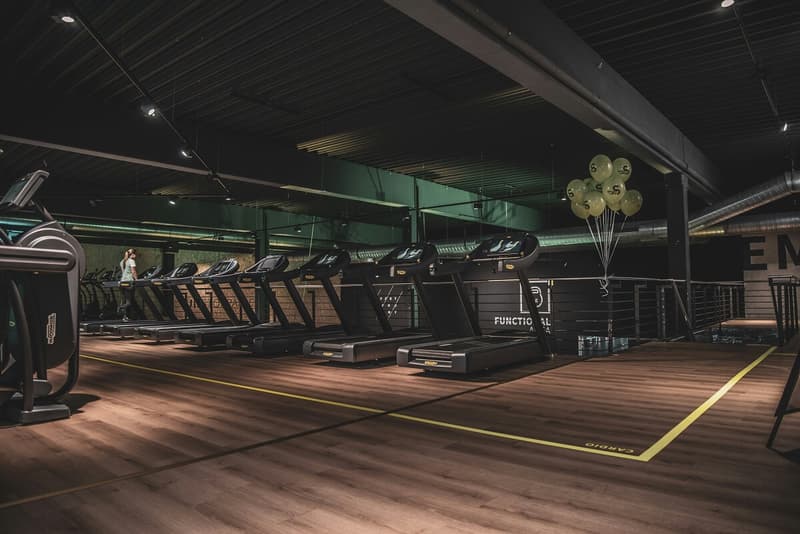 ## **What is a gym consistency club?** A consistency club is a simple system that rewards members for how often they actually attend, not how often they book. Most gyms run it on a monthly cycle (weekly works too, but it's less common), and the target is usually set by membership type: an unlimited member might have a target of 13 sessions a month, while someone on a twice-a-week plan might be set a target of 8. When it's built into your gym's app, the member sees their own progress as soon as they open it: a simple bar or graph showing how close they are to their monthly target. That visibility does most of the work on its own. ## **Turn attendance into a game** Gamification is really just borrowing what works in apps like Strava and Duolingo and applying it to gym attendance. A few elements make the biggest difference: **Levels and colours.** Split the target into tiers (bronze, silver, gold, or whatever fits your brand), so members have a near-term goal rather than one big number that feels out of reach. **Lifetime milestones.** Reward cumulative attendance, not just the current month: 100, 250, 500 classes attended. It's the same idea behind a parkrun 100 or 500 t-shirt, and it works for the same reason. It becomes something members are visibly proud of in front of their training partners. **Leaderboards.** A competitive element gives members a reason to check in daily, not just when they're deciding whether to train. **Hidden thresholds for new members.** This one matters more than it sounds. If a brand-new member can see a target of three sessions a week from day one, it can feel unreachable, especially in the first fortnight when they're too sore to move. Automatically levelling someone up once they hit a smaller, hidden milestone (like their first single session) gives them a genuine win without ever showing them a number that might put them off. One small, unplanned example makes the psychology behind this obvious. WodBoard originally built a feature that learned a member's usual training slot and pre-booked them into it automatically, turning the attendance bar green when they showed up and red when they didn't. Within days of launch, gym owners were being messaged by members asking for the red bar to be removed. Nobody wants to be the one still sitting in red while their training partners are all green. That reaction is the whole argument for gamifying attendance in one anecdote: members care about these small visual cues far more than most gym owners expect. ## **Take it into the real world, not just the app** The mistake most gyms make is treating consistency as a purely digital feature. The real-world side of it matters just as much, and it doesn't need to cost much: - Shout-outs on a community board or in a newsletter when members hit a milestone - Physical rewards: t-shirts, keychains, badges, or a discount at a partner shop - An annual celebration built around the challenge, timed to a seasonal moment members already look forward to One gym runs an annual "red carpet" event around Christmas, built entirely around that year's consistency challenge, where members are recognised, and prizes are handed out in person. It works particularly well because not everyone is going to hit a big lifting milestone or land a new gymnastics skill, but everyone can win on consistency. Want to build the habit into your gym? Listen to George and Viv on [The Gym Owner’s Manual](https://www.thegymownersmanual.com/) podcast.  ## **Check in with members directly** Alongside the gamified side, a scheduled personal check-in, a call or message at the one-month and three-month marks- catches the members who are quietly drifting before a consistency club's numbers even flag it. It's a small addition, but it covers the human side that a leaderboard can't. ## **Getting started** Start with one challenge rather than trying to build the whole system at once, and make sure it's genuinely manageable from an admin perspective before you launch it. The gyms that keep a consistency club running long-term are the ones that automated it from day one: set your levels and targets once inside your gym software, and it runs itself from there, with the only ongoing task being checking the leaderboard when it's time to hand out physical rewards. ## **Frequently asked questions** **What is a consistency club for gyms?** A system that tracks and rewards how often members actually attend, rather than how often they book, usually run monthly with targets set by membership type and shown to the member as a visible progress score. **How should I set attendance targets?** Base them on what's realistic for each membership type, for example roughly 13 sessions a month for an unlimited plan or 8 for a twice-weekly plan, and consider tiered levels so the target doesn't feel like one unreachable number. **Does a consistency club work for new members too?** Yes, and arguably it matters most for them. Hiding the higher thresholds and automatically levelling new members up after a smaller first milestone keeps early progress feeling achievable instead of intimidating. If setting up and tracking a consistency club sounds like more admin than it's worth, see how [WodBoard's membership tools](https://www.wodboard.com/) can automate it end-to-end, or [book a demo](https://www.wodboard.com/book_demo) to see it in action. --- This blog is powered by Superblog. Visit https://superblog.ai to know more. --- ## Why gym membership pauses cost you more than you think (and how to fix yours) Published: 2026-09-04 Category: Gym Growth & Marketing Category URL: https://www.wodboard.com/blog/category/gym-growth-and-marketing Meta Title: Why Gym Membership Pauses Cost You More Than You Think Meta Description: Learn why gyms lose more than revenue on pauses, the real difference between a genuine pause and a soft cancel, and how to build a pause policy that's fair to both sides. URL: https://www.wodboard.com/blog/why-gym-membership-pauses-cost-you-more-than-you-think  A member asks to pause their membership. It seems like a small, reasonable request, and it usually is. But pauses are one of the quietest ways a gym loses money, and if your policy isn't clear, you're leaving the decision to guesswork every single time it comes up. ## **Why membership pauses are riskier than they look** The obvious cost is the lost monthly revenue. The less obvious cost is what happens to the member while they're away: they lose consistency, they lose the habit of showing up, and by the time their pause ends, they often don't feel fit enough to restart. That's when a pause quietly turns into a cancellation. Not all pauses carry the same risk. A member going on holiday for two weeks with every intention of returning tends to pick their routine straight back up. The one worth watching is what amounts to a soft cancel: someone pauses citing being "busy at work," with no real return date in mind. These tend to cluster around February and March, right after New Year's resolutions have worn off, rather than around the obvious summer or Christmas breaks. ## **Should gyms even allow pauses?** There's a real argument on both sides. You can't pause your Netflix subscription or your electricity bill, and a gym has finite class spaces: every pause is a space you can't sell to someone else, and if the member does come back, you may not have room for them. Against that are the genuinely practical situations: injury, a work relocation, a member who's pregnant. Refuse pauses outright, and you lose goodwill in exactly the cases where flexibility matters most. Where you land also depends heavily on your business model. A high-street gym charging £25 to £30 a month has very different economics around an empty space than a semi-private or personal training studio charging £300 to £500 a month. There's no universal right answer here, only the right answer for your specific gym.  ## **5 strategies for handling pauses fairly** **Charge a pause fee.** A small monthly fee, well below the full membership price, works as a natural filter. A member who genuinely intends to return is usually happy to pay it. Someone who was really trying to cancel without an awkward conversation tends to reveal themselves at this point, which is useful information even when it's a lost member: you know you need to backfill that space rather than assuming it'll return. **Set a minimum pause period.** A month is the number most gyms land on. It's long enough to filter out someone quietly trying to dodge a week or two of payment before a holiday, while still working well for genuine reasons like relocating or a temporary work posting. **Cap the number of pauses per year.** Rather than restricting duration, some gyms give members one or two pauses a year to use however they like. It's fairer to the member, but it adds admin overhead: you need to track usage per member, which means your membership software needs to handle it properly. **Handle genuine hardship cases individually.** Injury, pregnancy, and redundancy are the recurring examples worth a case-by-case exception, sometimes without a fee at all. Some gyms go further for redundancy specifically, offering a discounted rate for a month or two rather than a full pause, on the basis that staying connected to a community matters most exactly when someone's under pressure. **Protect your rate with grandfathering.** If a paused member keeps their original rate but a cancelled member returns at your current (likely higher) rate, you've built in a real incentive to pause rather than cancel outright, and to come back sooner rather than later. Photo by Ambitious Studio\* \| Rick Barrett on Unsplash ## **What WodBoard's own data shows about pauses** Looking across every pause ever logged on the platform, the pattern is remarkably consistent. July is the single most common month to pause, driven by summer holidays. December comes second, as the party season takes over. February and March take third, which lines up with exactly the soft-cancel pattern described above: New Year's resolutions fading fast. The most striking figure is on the other end: the longest genuine pause on record before someone actually returned was two and a half years. George and Viv go into the full data breakdown, including one outlier so extreme it almost doesn't count, on [The Gym Owner's Manual](https://www.thegymownersmanual.com/) podcast. [](https://www.thegymownersmanual.com/) ## **How to build your pause policy** Once you've decided which strategies fit your gym, the value is in writing it down properly rather than making the call fresh each time. 1. Go through each strategy above and decide what applies to your business and demographic. 2. Write it up as a standalone pause policy, not buried inside your general terms and conditions or health waiver. 3. Put it through your legal document process so members sign it explicitly when they join, so nobody can say they didn't know the rules. 4. Ask members for a reason when they pause, and categorise it (injury, redundancy, pregnancy, and so on) so you can see which reasons come up most and whether your policy still reflects your values. 5. Talk to whoever on your team actually handles pause requests. They'll have seen the real patterns and edge cases your policy needs to account for. ## **Frequently asked questions** **Should gyms charge a fee for pausing a membership?** Many do, and it's an effective way to distinguish members who genuinely intend to return from those quietly trying to cancel without the conversation. The fee is typically well below the full membership rate. **What's a reasonable minimum pause period?** A month is the most common choice. It's long enough to discourage short-term payment dodging around a holiday while still covering genuine situations like relocation or extended work travel. **When are gyms most likely to see pause requests?** Based on WodBoard's own data, July is the most common month (summer holidays), followed by December (the festive season), then February and March, which tend to be soft cancels following New Year's resolutions. If tracking pause allowances, reasons, and signed policies is turning into its own admin job, see how [WodBoard's membership tools](https://www.wodboard.com/) can handle it automatically, or [book a demo](https://www.wodboard.com/book_demo) to see it in action. --- This blog is powered by Superblog. Visit https://superblog.ai to know more. --- ## 7 marketing ideas to fix the summer gym slump (and keep enquiries coming in) Published: 2026-09-04 Category: Gym Growth & Marketing Category URL: https://www.wodboard.com/blog/category/gym-growth-and-marketing Meta Title: 7 Marketing Ideas to Fix the Summer Gym Slump Meta Description: Enquiries always dry up in summer. Try these 7 low-budget marketing ideas, from Bring a Friend Day to HYROX sims, to keep new members walking through the door. URL: https://www.wodboard.com/blog/7-marketing-ideas-to-fix-the-summer-gym-slump  Summer is quietly one of the hardest seasons to grow a gym. It's hot, everyone's outdoors, there's usually a big sporting tournament dominating the TV, and the last thing on anyone's mind is signing up somewhere new. Enquiries slow down, and the ones that do come in take longer to turn into members. It's a pattern most class-based gyms see every year, and it's rarely about interest dropping. It's about timing. ## **1\. Bring a Friend Day** Give members a free trial class to bring a friend to. The reason this works better than most referral schemes is simple: your members are already the kind of person who trains hard and sticks around, so their friends tend to be similar people. Timing matters more than most gyms think. Running it on a Thursday, near the end of the month, catches people just after payday, when "I should probably get fit too" is easier to say yes to. Adjust the day to whenever your local pay cycle actually falls; the principle is the same everywhere. ## **2\. A HYROX simulation event** has exploded across Europe and is picking up fast in the US, and anyone training for one wants to rehearse the pacing and logistics before race day. Running a simulation event (same rough distances, same rough weights, open to the public) gives them exactly that. Two things make this idea better than most: people expect to pay for it, so you're being paid to bring new leads through the door, and you can capture their details on the way in to follow up afterwards. Time it four to six weeks ahead of a real HYROX event in your region, and pair it with HYROX-style programming if you run any, so the follow-up offer is obvious rather than generic.  ## **3\. Local business partnerships** Pair up with businesses near you: a café, a physio, a local shop, and swap discounts. It doesn't need to be complicated: 10% off, or a free week of classes, is enough to start. The value isn't really the discount; it's the trust: someone who already likes and visits that business is more receptive to a recommendation sitting on the counter than to a cold ad. If you're a WodBoard gym, this is easier to keep visible than a stack of leaflets: create a Discounts folder in your Content Hub, add a file per partner business, and members can find it in the app any time. It also works quietly on retention, since nobody wants to cancel and lose their 10% off the bakery next door. ## **4\. A recurring open day** Most gyms only run an open day once, when they first launch. It's worth bringing back once or twice a year, because it reaches people a normal trial class doesn't: the ones who are curious but intimidated by walking into a room full of people who clearly know what they're doing. Keep it low-key: quiet gym, a couple of friendly coaches, no expectation that anyone trains. Show people around, ask what they're trying to achieve, and capture their name, email and number before they leave, ideally against a specific low-commitment offer like a two-week intro period rather than a full membership. A prize draw for a free month works well as the hook for handing over details. ## **5\. Real-life, offline advertising** Digital marketing is measurable, which is exactly why most advertising budgets have piled into it and left offline space comparatively cheap and underused. A few options worth checking, depending on your local bylaws: - **Billboards**: pricier in big cities, often surprisingly affordable in smaller towns. - **A street sign or sandwich board** outside the gym, with the message changed regularly so regulars don't tune it out. A rotating, slightly funny daily line on a chalkboard is the version people actually stop and read. - **Posters and stickers** in high-footfall spots: check local rules first, since most require your details on them. - **Leaflets**: genuinely novel again now that almost nobody sends them. Something physical to hold stands out precisely because it's rare.  ## **6\. A free community-run club** Running is having a moment, largely on the back of HYROX, and a weekly or monthly run club is a low-cost way to ride that. Run it early in the week; a Monday or Tuesday evening works well, when people would otherwise be doing nothing, at an easy, conversational zone 2 pace, 5 to 8k. No charge, and open to members, their friends, and anyone local. This is a top-of-funnel play, not a quick win: it takes months of consistent, repeated sessions before it converts into memberships, but it works because people get to know and like you before they ever consider joining. Finishing at a nearby café or pub helps it feel social rather than transactional. It's also a naturally seasonal idea: start it now while the evenings are still light, and let people migrate indoors to your gym as the weather turns later in the year. ## **7\. An end-of-summer member barbecue** Invite members to bring a plus-one to a barbecue, ideally paired with a short, low-intensity partner or team workout to ease everyone back into routine after a summer of disrupted schedules. It's an easy, low-pressure way for a guest to get exposed to your community without the intimidation of a normal class, and it's genuinely good for retention, since members reconnect with people they only ever see in passing at different class times. Charging a small fee for food (members and guests) keeps it simple to run. It's also worth asking members directly if they'd like to contribute; a member who plays guitar or has a skill to show off usually says yes, and it costs you nothing but a thank-you. ## **How to make any of these stick** Before you run any of these, three things are worth getting right: - Pick one, not all seven. Choose something you can set up within a week or two and measure quickly. - Ask members to help. Most are glad to be involved, and it costs you nothing but a thank-you. - Write down every step the first time you run it. Turn it into a simple checklist, so the same idea takes a fraction of the effort the second time around. Want more ideas to keep enquiries coming in over summer? Listen to George and Viv talk through all seven, and why they work, on [The Gym Owner’s Manual](https://www.thegymownersmanual.com/) podcast. [](https://www.thegymownersmanual.com/) ## **Frequently asked questions** **What's the best low-budget marketing idea for gyms in summer?** A Bring a Friend Day is usually the easiest starting point. It costs nothing, uses trust you've already built with existing members, and can be set up within a week. **Is a community-run club worth it if it doesn't convert people straight away?** Yes, but treat it as a long-term play rather than a quick win. It typically takes several months of consistent sessions before it meaningfully feeds into memberships, so it works best as a background activity you run every week rather than a one-off. **Do offline marketing ideas like posters and leaflets still work?** They can, particularly because so few businesses use them now, which makes them stand out. Always check local rules on posters, stickers and signage before you start, since most areas require your details on anything displayed publicly. If chasing enquiries and running events is eating into time you'd rather spend coaching, see how [WodBoard's membership and automation tools](https://www.wodboard.com/) can take the admin off your plate, or [book a demo](https://www.wodboard.com/book_demo) to see it in action. --- This blog is powered by Superblog. Visit https://superblog.ai to know more. --- ## Why you're doing every job in your gym badly (and what to do about it) Published: 2026-09-03 Category: Gym Growth & Marketing Category URL: https://www.wodboard.com/blog/category/gym-growth-and-marketing Meta Title: Why You're Doing Every Job in Your Gym Badly Meta Description: Learn the 3-pillar framework gym owners use to know what to do themselves and what to hand off, plus when it's time to hire admin help. URL: https://www.wodboard.com/blog/why-youre-doing-every-job-in-your-gym-badly  You started your gym to coach: the classes, the coaching, the energy of the gym floor. Somewhere along the way you also became the cleaner, the receptionist, the social media manager and the accountant. If that sounds familiar, you're not alone. It's one of the most common patterns we see across gyms of every size. The fix is a simple framework for working out what to hand off and when. ## **What is the 3-pillar framework for gyms?** Every gym business runs on three pillars, whether you've defined them or not: 1. **Product.** The classes, the coaching, the experience people actually show up for. 2. **Sales and marketing.** Getting new people through the door. 3. **Operations.** Everything else that has to happen for the first two to work: legal, finance, admin, even the toilets. Most gym owners have never split their business up this way. They're just doing all three, all the time, and wondering why nothing feels like it's going well. ## **Why doing all three pillars yourself doesn't work** > "The problem is when there's so many jobs, you're not doing any one job well. You're just trying to get them off your plate so you can get onto the next thing." > > George Palmer, WodBoard’s founder It's not a discipline problem. It's a skills mismatch. The traits that make someone great at sales and marketing (people-focused, persuasive, comfortable improvising) tend to be the opposite of the traits that make someone great at operations (detail-focused, process-driven, comfortable with admin). Trying to be both at once means spending most of your week on the two pillars you're worst at. ## **Which pillar should you keep, and which should you hand off first?** Roughly 80 to 90% of gym owners come into the business through coaching or personal training, which means Product is usually the pillar they're strongest at and enjoy most. If that's you, the next step is simple: work out which of the other two pillars you like least, and look for help there first. For most owners, that's Operations. It's rarely anyone's favourite part of the job, which is exactly why it's usually the first thing worth handing off. Once that's covered, you're down to one pillar left to solve: sales and marketing. Repeat the process from there.  ## **When should you actually hire help?** There's a practical side to this: on day one, with five members, hiring admin help isn't realistic, and the admin burden itself is still small. But as membership grows, so does the time cost of things like membership pauses, holiday requests, and general day-to-day admin noise. ### **Signs it's time to bring in admin help:** - You're spending hours a week on tasks that have nothing to do with coaching or growth - Member requests (pauses, cancellations, general queries) are starting to pile up - You're at, or approaching, 50 to 100 members, the point at which most class-based gyms need dedicated admin support - Growth has stalled because your time is going into admin instead of sales and marketing Push past that point without help, and the hours going into admin are hours you're not spending coaching or growing the business, even if the admin itself is manageable. ## How to work out what to hand off next A simple exercise to work out what to hand off next: 1. Write down the three things you enjoy most about running your gym. 2. Work out which pillar each one sits in. 3. Look at anyone else already in the business. Are they clearly covering the other pillars, or is it all a bit blurry? 4. Whatever's left blurry or uncovered is your next hire. Want to get more of your week back? Listen to George and Viv explain the three pillars and how to decide what to hand off on [The Gym Owner’s Manual](https://www.thegymownersmanual.com/) podcast. [](https://www.thegymownersmanual.com/) ### **Frequently asked questions** **How many members do I need before hiring admin help?** There's no fixed number, but 50 to 100 members is a reasonable rule of thumb for most class-based gyms. **What's the difference between the three pillars?** Product is what members show up for (classes, coaching). Sales and marketing is what get new people through the door. Operations is everything else that keeps the business running. **Should I hire for operations or marketing first?** Whichever pillar you enjoy least, or which is currently weakest, is usually the right place to start. For most coaching-led owners, that's operations. If admin is the pillar eating your time, [see how WodBoard's membership and automation tools](https://www.wodboard.com/features) can take it off your plate, or [book a demo](https://www.wodboard.com/book_demo) to see it in action. --- This blog is powered by Superblog. Visit https://superblog.ai to know more. --- ## From chaos to control: how all-in-one software transforms gym management Published: 2026-07-27 Category: Gym Growth & Marketing Category URL: https://www.wodboard.com/blog/category/gym-growth-and-marketing Tags: gym growth, gym management, crossfit, hyrox Tag URLs: gym growth (https://www.wodboard.com/blog/tag/gym-growth), gym management (https://www.wodboard.com/blog/tag/gym-management), crossfit (https://www.wodboard.com/blog/tag/crossfit), hyrox (https://www.wodboard.com/blog/tag/hyrox) URL: https://www.wodboard.com/blog/how-all-in-one-software-transforms-gym-management  You know the feeling. A coach asks whether a member has paid. Someone else wants to freeze their membership. A trial lead is waiting for a reply, tonight’s class is nearly full and you’re trying to remember whether the timetable change was shared with everyone. None of these problems is particularly difficult. The challenge is that they all need your attention at once. When the owner becomes the person connecting every part of the gym, the business may look organised from the outside while feeling chaotic behind the scenes. All-in-one gym software changes that by creating one reliable place for your team, members and business information. It isn’t just about replacing a few admin tools. It’s about running the gym with more control. ### Control starts with knowing what’s happening It’s difficult to make good decisions when information is scattered or out of date. You should be able to see how many members are active, which classes are filling up, whether payments have failed and who hasn’t trained recently—without spending your morning building a spreadsheet. An all-in-one platform brings that information together. Instead of relying on memory or waiting for a problem to reach you, you can see what needs attention. That might mean contacting a previously consistent member whose attendance has dropped, adding another session to a busy time slot or following up with a trial visitor who hasn’t joined. Clear information turns guesswork into action. ### Create a member journey that doesn’t rely on memory Think about what happens when someone first contacts your gym. Who replies? Where is their information recorded? What happens after their trial? Does anyone check whether they attended their first week? In many gyms, the answers depend on who is working that day. One member receives a warm welcome and a quick follow-up, while another waits two days for a response. A connected system makes the process more consistent. New enquiries can be recorded, follow-ups scheduled and important actions assigned to the right person. Once someone joins, their bookings, membership and attendance remain connected to the same profile. Automation can handle routine messages and reminders, but coaches still provide the human contact. The system makes sure the opportunity isn’t forgotten; your team makes the experience personal.  ### Give your staff clarity A gym is difficult to manage when every question has to go through the owner. Your coaches should be able to find the information they need without messaging you between classes. They need to know who is booked in, what the session involves and whether a member requires particular support. Clear staff access also makes responsibilities easier to manage. People can see the information relevant to their role without gaining access to parts of the business they don’t need. This matters as your team grows. Informal systems may work when two coaches share most of the timetable, but they become harder to maintain when more people, classes and locations are added. Good software creates consistency without requiring the owner to supervise every detail. ### Make everyday tasks easier for members Members don’t think about gym management systems. They simply know whether dealing with your gym feels easy or frustrating. They want to book a class without sending a message, join a waitlist without calling reception and update their membership without chasing the owner. They also want to see relevant information without searching through old emails or social media posts. A clear member app gives them a familiar place to manage those everyday tasks. Fewer obstacles mean fewer questions for your team and a smoother experience for members. This doesn’t replace community or good coaching. It removes the small frustrations that can get in their way. ### Spot problems before they become cancellations Cancellations can appear sudden, but disengagement often begins earlier. A regular member starts attending less frequently. A failed payment isn’t resolved. Someone books a trial but never comes back. When that information sits in different places—or isn’t tracked at all—it’s easy to miss the warning signs. An all-in-one platform gives you a clearer picture of each member’s activity. Your team can identify changes and decide when someone may benefit from a personal check-in. A simple message from a coach can make a difference: “Hi Sam, we haven’t seen you this week. Is everything okay?” The software doesn’t retain the member. It helps your team notice when the relationship needs attention. ### Build a gym that can operate without you Many gym owners want more freedom, but the business still depends on them answering every question and solving every problem. That makes taking time away difficult. It can also limit growth because adding more members creates more work for the same person. Better systems reduce that dependency. When information, processes and responsibilities are clear, your team can handle more of the day-to-day operation confidently. You remain in control, but you no longer need to be involved in every membership change, booking issue or staff query. That creates room to work on the business rather than constantly working inside it. Photo by Ryan De Hamer on Unsplash ### Choose software around the way your gym works The best platform isn’t necessarily the one with the most features. It’s the one your members and staff can use confidently. Before switching, identify where your current process breaks down. Look at the points where information gets lost, jobs are repeated or everything comes back to you. Then focus on the essentials: - Can members book, pay and manage their accounts easily? - Can coaches find what they need? - Can repetitive tasks be automated? - Can you see the information required to make decisions? - Will the platform support the gym as it grows? The aim isn’t to digitise every part of the business. It’s to make the important parts work better. ### From holding everything together to moving forward Chaos doesn’t always look dramatic. Sometimes it looks like constant interruptions, repeated questions and an owner who can never quite switch off. All-in-one software creates control by giving everyone a clear place to work. Members can manage their experience, coaches have the information they need and owners can see what is happening across the business. WodBoard brings bookings, memberships, payments, programming and gym operations into one connected platform. It helps remove repetitive admin without removing the personal service that makes your gym different. **Book a demo and see what running your gym with greater control could look like.** --- This blog is powered by Superblog. Visit https://superblog.ai to know more. --- ## How great onboarding turns new athletes into loyal members Published: 2026-07-27 Category: Gym Growth & Marketing Category URL: https://www.wodboard.com/blog/category/gym-growth-and-marketing Tags: gym member retention, gym growth, crossfit, hyrox Tag URLs: gym member retention (https://www.wodboard.com/blog/tag/gym-member-retention), gym growth (https://www.wodboard.com/blog/tag/gym-growth), crossfit (https://www.wodboard.com/blog/tag/crossfit), hyrox (https://www.wodboard.com/blog/tag/hyrox) URL: https://www.wodboard.com/blog/how-great-onboarding-turns-new-athletes-into-loyal-members  A new member has signed up. Brilliant. Now comes the part that matters most: helping them through their first few weeks. Walking into a new gym can be intimidating. Everyone else seems to know where to stand, what equipment to use and how each class works. A new member may be wondering whether they’re fit enough, whether they’ll keep up or whether they’ve made the right decision. Good onboarding removes that uncertainty. It helps someone move from feeling like a visitor to feeling like part of the gym. Here’s how to create an onboarding experience that keeps people coming back. ### Make contact before they arrive Don’t wait until someone walks through the door to welcome them. Send a short message from the coach who will meet them: “Hi Sam, it’s Alex from the gym. I’ll be coaching your first session on Thursday. Come and find me when you arrive and I’ll show you around.” It takes less than a minute, but it gives the member a name and a point of contact. They know someone is expecting them, which makes arriving for that first session much easier. When they walk in, greet them by name. Show them where to leave their belongings, introduce them to the coach and explain what will happen during the session. They don’t need balloons, a lengthy presentation or a bag full of merchandise. They simply need to know they’re in the right place and that someone is looking after them. ### Make the first session easy to navigate What feels obvious to an experienced member may be completely unfamiliar to someone new. How does the class begin? Where should they stand? What happens if they can’t perform a movement? How do they book their next session? Answer these questions before they become a source of anxiety. Keep the introduction focused on what they need that day. Explaining every class type, gym rule and app feature at once can quickly become overwhelming. Show them the essentials, then introduce the rest as they settle in. By the end of the first visit, they should understand how the class works, how to book again and who to speak to if they need help.  ### Find out why they joined Not everyone arrives with the same goal. One person may be preparing for HYROX. Another wants to rebuild strength after time away from training. Someone else may simply want a routine that helps them feel better. Ask what brought them in and what they would like to achieve. It’s also worth asking what has made consistency difficult in the past. Their answer may tell you more than a list of fitness targets. Help them choose a realistic starting point. Two sessions a week that fit around work and family are more valuable than an ambitious five-session plan that lasts ten days. Record their goals, previous experience and any injuries or concerns somewhere the coaching team can access them. A new member shouldn’t have to explain the same problem every time they meet a different coach. ### Give them an early win New members need evidence that they’re moving forward.An early win doesn’t have to be a dramatic transformation. It could be completing three sessions in one week, learning how to lift safely or finishing a workout they were nervous about. The achievement doesn’t need to impress anyone else. It needs to matter to them. Coaches can help by pointing out progress as it happens. A specific comment such as, “Your squat looked much more confident today,” is more meaningful than a generic “good job.” Set a small target during their first week and revisit it later. When people can see that their effort is producing a result, they have a stronger reason to continue. ### Help them find their place Community can be one of your gym’s greatest strengths, but new members won’t automatically feel part of it. Make introductions naturally. Pair them with a friendly, experienced member during a partner session or introduce them to someone with similar goals. Invite them to a beginner workshop, social event or relaxed community workout. Think about the individual before putting them in the spotlight. Some people will enjoy a public welcome, while others would rather settle in quietly. Pay attention to members who arrive, train and leave without speaking to anyone. They may be enjoying the sessions, but they haven’t yet formed relationships that make the gym feel familiar. You don’t need to force friendships. You just need to create opportunities for them to develop.  ### Check in before motivation slips The first session shouldn’t be the last time a new member hears from you. Check in after their first week. Ask how they’re finding the classes, whether anything feels unclear and if their planned routine is working. Keep the conversation relaxed and easy to answer. If their attendance drops, contact them before returning starts to feel difficult: “Hi Sam, we haven’t seen you this week. Is everything okay? Let me know if you’d like help finding a session that works.” The message doesn’t need pressure or a sales pitch. It simply shows that their absence was noticed. Gym software can help by tracking attendance and showing your team when someone may need support. But the follow-up should still feel personal. Technology identifies the gap. Your coaches rebuild the connection. ### Keep the process simple Effective onboarding doesn’t require a thick handbook, an expensive welcome pack or dozens of automated emails. Contact the member before they arrive. Make the first session easy. Understand why they joined, give them an achievable target and help them connect with other people. Most importantly, notice when their routine begins to slip. That’s the difference between processing a membership and beginning a coaching relationship. WodBoard helps gyms manage bookings, attendance, communication and progress in one place, giving coaches more time to focus on the people behind the memberships. --- This blog is powered by Superblog. Visit https://superblog.ai to know more. --- ## Local SEO for gyms: How to attract more members in your area Published: 2026-07-24 Category: Gym Growth & Marketing Category URL: https://www.wodboard.com/blog/category/gym-growth-and-marketing Meta Title: Local SEO for Gyms: Get Found by More Local Members Meta Description: Learn how to help more people find your gym on Google, improve your local visibility and turn nearby searches into trials and new members. Tags: gym growth, crossfit, hyrox, Gym Marketing Tag URLs: gym growth (https://www.wodboard.com/blog/tag/gym-growth), crossfit (https://www.wodboard.com/blog/tag/crossfit), hyrox (https://www.wodboard.com/blog/tag/hyrox), Gym Marketing (https://www.wodboard.com/blog/tag/gym-marketing) URL: https://www.wodboard.com/blog/local-seo-for-gyms-how-to-attract-more-members-in-your-area Photo by NisonCo PR and SEO on Unsplash ### Someone in your area has decided they want to join a gym. They pick up their phone, search “gyms near me” and look at the first few options. Within minutes, they’ve checked some photos, read a handful of reviews and visited one or two websites. Will your gym make the shortlist? That’s what local SEO is really about. Forget the marketing jargon: it simply means making it easier for nearby people to find your gym when they search online. You don’t need a huge marketing budget or a complicated strategy. You need to show Google where your gym is, what you offer and why local people trust you. ## Get your Google listing in shape Your Google Business Profile is the information that appears when someone finds your gym on Google Search or Maps. For many people, this will be their first impression of your business. They may decide whether to contact you without ever reaching your website. Make sure the basics are correct: your gym’s name, address, phone number, opening hours and website. Choose a category that accurately describes your business and update your hours whenever they change. Google says local results are largely based on relevance, distance and prominence. In plain English, it wants to know whether your gym matches the search, whether it’s close enough and whether it appears to be an established business that people trust. [Google Business Profile Help](https://support.google.com/business/answer/7091?utm_source=chatgpt.com) You can’t control where the person searching is standing, but you can make everything else as clear as possible. Photo by George Pagan III on Unsplash ## Show people what they’re walking into Most potential members want to see the gym before they visit it. Upload recent photos of your classes, coaches, equipment and training space. Show the gym at its best, but keep it real. People want to understand what an ordinary Tuesday evening looks like not just what the facility looked like on launch day. Think about what your photos communicate. If every image shows an advanced athlete lying on the floor after a brutal workout, a beginner may assume the gym isn’t for them. Include friendly coaches, mixed-ability classes and members enjoying themselves. If you offer beginner sessions, personal training or HYROX classes, show those too. A short video tour can work particularly well. Walk people through the entrance, changing area and training floor. Introduce a coach and explain what happens during someone’s first visit. Removing a little uncertainty can make booking feel much easier. ## Ask for reviews while the win is fresh Reviews matter because people trust other members more than they trust your marketing. The best time to ask is after a positive moment. Perhaps someone has completed their first month, reached a personal best or told a coach how much they’re enjoying the gym. Don’t turn it into a big campaign. Send a short, personal message with a direct link: “Great work this month, Sam. If you have a minute, would you mind sharing your experience in a Google review? It really helps local people find us.” Never tell members what to write. Honest reviews that mention the coaching, atmosphere or beginner experience are far more convincing than a collection of suspiciously perfect one-liners. Respond to reviews as well. A simple thank-you shows that you’re listening. If someone leaves criticism, reply calmly and professionally. Future members will be reading your response too. Google confirms that reviews and helpful replies can make a business stand out, while review numbers and ratings may also contribute to local visibility. [Google Business Profile Help](https://support.google.com/business/answer/7091?utm_source=chatgpt.com) 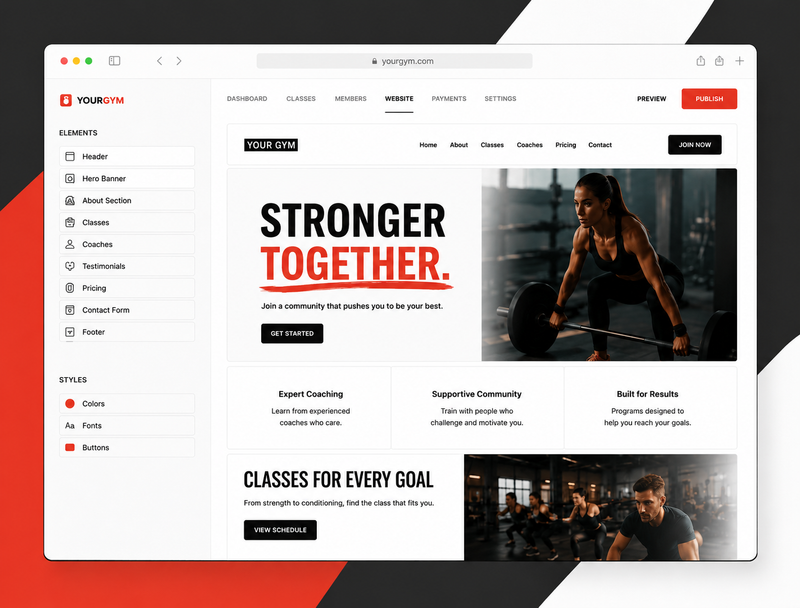 ## Make your website pass the five-second test Open your gym’s homepage and imagine you know nothing about the business. Within five seconds, can you tell where the gym is, what type of training it offers and how to get started? If not, simplify it. Your homepage should say what you do and where you do it in normal language. Something like “Coach-led strength and conditioning in Bristol” is clearer than a vague headline about unlocking potential. You don’t need to cram “best gym in Bristol” into every paragraph. Mention your location naturally and give each main service a useful page of its own. CrossFit, HYROX, weightlifting, personal training and beginner programmes answer different needs, so don’t squeeze them all into a few lines on one page. If you have more than one location, give each gym its own page. Include the correct address, timetable, contact details and photos for that specific site.  ## Make it ridiculously easy to book Getting found is only half the job. The next step must be obvious. Choose one main action, such as booking a trial or arranging an introduction, and make it easy to find. Don’t make someone hunt through three pages to discover how to contact you. Tell them what will happen next. How long does the first visit take? What should they wear? Will they be expected to join a full class? Is it suitable for someone who hasn’t trained in years? These details may feel obvious to you, but they aren’t obvious to someone who is nervous about walking through the door. Check the process on your phone. If the page loads slowly, the text is tiny or the booking form asks for someone’s life story, you’ll lose enquiries. ## Be visible in your local community Google also notices when other local websites mention and link to your gym. That doesn’t mean sending awkward emails asking strangers for “backlinks.” Focus on real relationships. Partner with a local physiotherapist. Support a running event. Sponsor a sports team. Host a charity workout. Write a useful training guide for a community website. These activities help people hear about your gym, and any online mentions can strengthen your local presence at the same time. You can also create content around questions people in your area genuinely ask. “How to Prepare for Your First HYROX in Leeds” is more useful and specific than another generic post about staying motivated. ## Track what brings people through the door You don’t need to spend hours studying marketing reports. Track the numbers that matter: calls, enquiries, trial bookings and new memberships. Ask every new member how they found you and record the answer. Google can also show you how people interact with your Business Profile, including website visits, calls and direction requests. Don’t become obsessed with checking where you rank from your own phone. Search results change depending on the searcher’s location. What matters is whether more of the right people are finding you and booking. ## Start with the basics and keep going Local SEO isn’t a one-day job, but it doesn’t need to take over your week. Keep your gym information accurate. Add new photos. Ask happy members for reviews. Make your website clear and your booking process simple. You don’t need to outspend the chain down the road. You need to make it obvious that your gym is local, active and trusted, and that new members will be looked after when they arrive. --- This blog is powered by Superblog. Visit https://superblog.ai to know more. --- ## How to keep learning as a gym owner Published: 2026-07-24 Category: Gym Growth & Marketing Category URL: https://www.wodboard.com/blog/category/gym-growth-and-marketing Meta Title: How to keep learning as a gym owner Meta Description: Running a gym means switching roles constantly. One minute you’re coaching a class, the next you’re answering a membership enquiry, reviewing the numbers or dealing with a broken rower. Tags: gym growth, gym owner, crossfit, hyrox Tag URLs: gym growth (https://www.wodboard.com/blog/tag/gym-growth), gym owner (https://www.wodboard.com/blog/tag/gym-owner), crossfit (https://www.wodboard.com/blog/tag/crossfit), hyrox (https://www.wodboard.com/blog/tag/hyrox) URL: https://www.wodboard.com/blog/how-to-keep-learning-as-a-gym-owner Photo by Justin Fisher on Unsplash ### Running a gym means switching roles constantly. One minute you’re coaching a class, the next you’re answering a membership enquiry, reviewing the numbers or dealing with a broken rower. With so much competing for your attention, your own development is easy to postpone. Learning becomes something you’ll get to when the timetable is quieter, the inbox is empty and everything is running smoothly. In other words, never. But continuing to learn doesn’t require hours of study or a calendar packed with courses. It’s about staying curious, paying attention to what’s happening in your gym and regularly making time to improve. ### Learn from what happens inside your gym Some of your best lessons won’t come from a book or webinar. They’ll come from the situations you deal with every day. Perhaps a conversation with a coach didn’t go as planned. Maybe a marketing campaign generated plenty of clicks but no new members. Or a class that normally runs smoothly suddenly felt flat. Instead of moving straight to the next task, take a moment to ask why. What worked? What didn’t? What would you do differently next time? This simple habit turns everyday challenges into useful feedback. It helps you spot patterns, improve your judgement and avoid making the same mistake twice. You don’t need to question every decision. You just need to remain open to the possibility that there might be a better way. ### Make learning fit your life Professional development doesn’t have to mean reading a pile of business books or spending another weekend in a conference room. Choose a format that works with the routine you already have. Listen to a podcast while driving to the gym. Watch a short case study over lunch. Read a chapter before the first class or take a practical course that helps you solve a current problem. The best learning method is the one you’ll actually continue using. One useful idea that changes how you manage your team is worth more than ten books you barely remember. A focused hour spent improving your membership journey may have more impact than a course you finish but never apply. Start small enough that it’s easy to continue. Fifteen minutes a few times a week can make a meaningful difference over the course of a year. Photo by Estée Janssens on Unsplash ### Talk to people who understand the job Gym ownership can be isolating. Even with a busy team and a strong community, there aren’t always many people around you who understand what it feels like to be responsible for the entire business. Other gym owners do. The problem you’re wrestling with may be something another owner solved last year. They may have already tested a new pricing structure, changed their timetable, improved coach retention or found a better way to follow up with enquiries. Join a useful online community, attend an industry event or arrange a regular coffee with a few local owners. Look for honest conversations where people share what they tried, what worked and what they would do differently. You don’t need to copy someone else’s approach. The value often comes from hearing a different perspective and questioning your own assumptions. Your closest competitors may even become useful allies. There’s enough variation between gyms, audiences and coaching styles for owners to learn from one another without giving away everything that makes their businesses distinct. ### Let your team teach you Your coaches and front-of-house staff experience the gym from a different angle. They hear questions members may never ask you. They notice confusing processes, changes in class energy and small problems before they become bigger ones. Make it easy for them to share what they see. A monthly team session could focus on a real challenge, such as welcoming new members, giving better coaching feedback or improving class consistency. Keep it practical and give everyone room to contribute. When a coach completes a course, invite them to share the most useful lessons with the team. If someone has developed strong knowledge in a particular area, give them an opportunity to lead a discussion or improve that part of the member experience. Learning shouldn’t always travel from the owner down. When knowledge moves in every direction, the whole team becomes stronger. ### Don’t ignore the business side Most gym owners didn’t enter the industry because they were excited about profit margins, sales processes or operational systems. They started because they loved coaching and wanted to help people. But learning how to run the business is what allows you to keep doing that work. You don’t need to become an expert in everything at once. Focus on the area creating the biggest problem today. If leads are disappearing after their first enquiry, learn how to improve your follow-up. If classes are busy but the bank balance doesn’t reflect it, spend time understanding your costs and margins. If every decision depends on you, start documenting the processes your team could manage. The more confident you become with the business, the less likely it is to control every hour of your life. ### Turn ideas into action Learning feels productive, but consuming information isn’t the same as making progress. When you find a useful idea, write it down along with one action you can take. Test it in your gym, give it enough time to produce a result and then review what happened. The action might be as simple as changing a welcome email, asking coaches one new question during their reviews or tracking a number you’ve previously ignored. Small changes are easier to test and more likely to happen. Over time, they build into better systems, stronger leadership and a healthier business. Photo by Arnaud STECKLE on Unsplash ### Keep moving forward There will probably never be a perfect time to focus on your own development. Gym ownership will always bring another class, question or unexpected problem. The answer isn’t to wait for more time. It’s to make learning part of how you work. Stay curious about your members. Listen to your team. Speak with other owners. Strengthen the business skills that don’t come naturally, and put useful ideas into practice before chasing the next one. WodBoard takes repetitive admin off your plate, giving you more time to develop your team, improve the member experience and work on the future of your gym. Book a demo --- This blog is powered by Superblog. Visit https://superblog.ai to know more. --- ## How to hire, train and keep great gym coaches Published: 2026-07-23 Category: Coaching & Programming Category URL: https://www.wodboard.com/blog/category/coaching-and-programming Tags: gym growth, CrossFit Gym Management, Hyrox Gym Management, gym business Tag URLs: gym growth (https://www.wodboard.com/blog/tag/gym-growth), CrossFit Gym Management (https://www.wodboard.com/blog/tag/crossfit-gym-management), Hyrox Gym Management (https://www.wodboard.com/blog/tag/hyrox-gym-management), gym business (https://www.wodboard.com/blog/tag/gym-business) URL: https://www.wodboard.com/blog/how-to-hire-train-and-keep-great-gym-coaches  Your coaches shape almost every part of the member experience. They set the tone in class, help beginners feel comfortable and notice when someone needs extra support. That makes building a strong coaching team more than an HR responsibility. Coaching quality directly affects member satisfaction, retention and referrals. Here’s how to hire the right people, prepare them properly and give them good reasons to stay. ### 1\. Hire for the role you need Gym recruitment is often reactive. A coach leaves or the timetable expands, and the owner rushes to find someone with the right qualifications and availability. That might solve an immediate scheduling problem, but it can create a larger one if the person isn’t suited to the role or your members. Before advertising, decide: - Which classes and hours need covering - What level of experience the role requires - How much responsibility the coach will have - Which behaviours are important in your gym - How the position could develop Focus on specific behaviours rather than looking for someone who is simply a “good cultural fit.” You might need a coach who welcomes new members without being prompted, explains movements clearly and responds well to feedback. Clarity at this stage helps candidates understand the job and gives you a more objective way to assess them. ### 2\. Watch candidates coach Qualifications and experience matter, but neither will show you how someone behaves in front of your members. Include a practical assessment in your hiring process. Ask candidates to lead a warm-up, coach a technical section or explain how they would adapt a workout for different abilities. You could also invite them to observe a class or submit a short coaching video. Look for clear communication, safety awareness and the ability to connect with different personalities. Do they notice the quieter person at the back? Can they correct someone without making them uncomfortable? Can they simplify an explanation when a member is struggling? Use the same core questions and practical task for every candidate. A simple scoring system will help you compare technical knowledge, communication, adaptability and response to feedback. The aim isn’t to catch candidates out. It’s to see how they apply their knowledge and whether their approach suits your gym. ### 3\. Create a structured onboarding process Even experienced coaches need time to learn how your gym operates. New hires need to understand your members, class structure, safety expectations and communication style. They should also know what they’re responsible for before, during and after each session. A gradual onboarding process could include: Support this with a concise coaching guide. It should cover how classes open and close, how movements are demonstrated, how sessions are adapted and how new or injured members are supported. The goal isn’t to make every coach identical. It’s to give members a consistent standard of coaching, regardless of who is leading the class. ### 4\. Make feedback and development routine Feedback is easier to accept when it’s a normal part of the job rather than something that appears only when there’s a problem. Observe classes regularly and discuss what went well, what could improve and what the coach should work on next. Keep feedback specific. “Bring more energy” is vague, while “greet every member before the briefing” gives the coach something practical to change. Feedback should work both ways. Coaches are often the first to notice member concerns, timetable problems and operational issues, so give them a reliable way to share what they’re seeing. Development matters too. Not every coach wants to become a manager, but most want opportunities to keep learning, earning or taking on more responsibility. One coach may be interested in beginner onboarding, while another wants to develop workshops, programming, personal training or community events. Regular conversations will help you understand what each person wants from the role. Photo by Meghan Holmes on Unsplash ### 5\. Give good coaches a reason to stay Coaches leave for many reasons, but unclear expectations, limited progression and inconsistent pay can all make the decision easier. Be transparent about how class pay is calculated, when compensation is reviewed and what is expected outside coaching hours. Coaches should also understand how additional responsibilities will be rewarded. Giving people ownership can increase engagement, too. A coach might lead beginner sessions, organise an event or manage a specialty programme. Give them enough authority and support to do the work properly, and agree on the time and compensation involved. Don’t wait for a resignation to find out that something isn’t working. Regularly ask coaches what they’re enjoying, what’s making their job harder and where they would like to develop. You may not be able to act on every suggestion, but listening consistently helps you spot problems early. ## Build a team worth staying for Hiring carefully is only the beginning. Strong coaching teams are built through clear expectations, structured onboarding, regular feedback and genuine opportunities to develop. When coaches feel prepared, supported and fairly rewarded, classes become more consistent and members receive a better experience. Equipment can be replaced and programming can be copied. A trusted team of great coaches takes much longer to build. --- This blog is powered by Superblog. Visit https://superblog.ai to know more. --- ## How to turn January sign-ups into long-term members Published: 2026-07-23 Category: Gym Growth & Marketing Category URL: https://www.wodboard.com/blog/category/gym-growth-and-marketing Tags: gym member retention, gym growth, crossfit, hyrox, gym business Tag URLs: gym member retention (https://www.wodboard.com/blog/tag/gym-member-retention), gym growth (https://www.wodboard.com/blog/tag/gym-growth), crossfit (https://www.wodboard.com/blog/tag/crossfit), hyrox (https://www.wodboard.com/blog/tag/hyrox), gym business (https://www.wodboard.com/blog/tag/gym-business) URL: https://www.wodboard.com/blog/how-to-turn-january-sign-ups-into-long-term-members Photo by Jimi A. on Unsplash January usually brings a welcome rush of new members. Classes fill up, motivation is high, and membership sales rise. But sign-ups alone don’t create sustainable growth. The real opportunity is helping new members build a routine they’ll want to maintain long after January ends. Here are seven practical ways to improve retention. ### 1\. Get the first week right A new member’s first few visits will shape how they feel about your gym. If the experience is welcoming and easy to navigate, they’re more likely to return. If it feels confusing or impersonal, their enthusiasm can quickly fade. Keep the sign-up process straightforward, send a useful welcome message, and make sure coaches know when someone is attending for the first time. Small details—such as greeting them by name or explaining what to expect—can make a noticeable difference. The aim is simple: help people feel comfortable from the start. ### 2\. Give new members a clear roadmap Joining a gym can be daunting. New members may not know which classes to choose, what equipment they need or how to measure their progress. A simple onboarding plan can remove much of that uncertainty. For example: There’s no need to explain everything on day one. Providing the right information at the right time helps members build confidence without overwhelming them. ### 3\. Make progress visible Motivation often drops when people feel they aren’t improving. Long-term goals matter, but they can feel distant, especially during the first few weeks. Help members notice the progress they’re already making. That might mean completing five classes, improving their technique, lifting a little more or attending consistently for a month. Some gyms celebrate these moments on a milestone board. Others recognise them during class or send a personal message. Whatever the approach, acknowledging early progress gives people a reason to keep going. ### 4\. Stay in touch If the only messages members receive are about payments or renewals, the relationship can quickly feel transactional. Communication doesn’t need to be constant. It just needs to be useful and well timed. A coach might send a quick message after someone’s first session, check in when a regular member stops booking or congratulate them on an attendance streak. These small interactions show members that their presence is noticed. Photo by Ambitious Studio\* \| Rick Barrett on Unsplash ### 5\. Create opportunities to connect People may join because of the training, but relationships often give them another reason to stay. Coffee after a Saturday class, informal gym socials, team challenges and online member groups can all help people get to know one another. These activities don’t need to be elaborate. They simply need to make conversation and connection easier. When members feel part of the gym—not just customers of it—leaving becomes a much less attractive option. ### 6\. Act on changes in attendance Most cancellations don’t come completely out of the blue. A member may start attending less often, stop booking their usual classes or disappear for several weeks. Tracking these changes allows your team to step in before the member has fully disengaged. A short, personal message such as, “We haven’t seen you for a while—can we help you get back into a routine?” may be all they need. The earlier you respond, the easier it is to help. ### 7\. Keep adding useful value Once members settle into a routine, they’ll continue to assess whether the gym is meeting their needs. Adding value doesn’t always mean adding more classes. Nutrition workshops, recovery advice, short challenges, technique sessions and useful member resources can all improve the experience. The best additions solve real problems for your members. Ask what they want help with, then use their answers to guide what you offer. ### Make January count January creates an influx of interest, but retention is built through what happens next. A thoughtful welcome, clear onboarding, visible progress, personal communication and timely support can help new members turn an initial burst of motivation into a lasting routine. WodBoard helps you track attendance, identify members who may be disengaging and automate timely communications—all while creating a smoother experience for your team and your members. **Book a demo to see how WodBoard can help turn January sign-ups into year-round members.** Book a demo --- This blog is powered by Superblog. Visit https://superblog.ai to know more. --- ## The real impact of choosing the right gym software Published: 2026-06-11 Category: Gym Growth & Marketing Category URL: https://www.wodboard.com/blog/category/gym-growth-and-marketing Tags: gym growth, gym system, gym owner, gym management software, Business Efficiency, crossfit, hyrox Tag URLs: gym growth (https://www.wodboard.com/blog/tag/gym-growth), gym system (https://www.wodboard.com/blog/tag/gym-system), gym owner (https://www.wodboard.com/blog/tag/gym-owner), gym management software (https://www.wodboard.com/blog/tag/gym-management-software), Business Efficiency (https://www.wodboard.com/blog/tag/business-efficiency), crossfit (https://www.wodboard.com/blog/tag/crossfit), hyrox (https://www.wodboard.com/blog/tag/hyrox) URL: https://www.wodboard.com/blog/the-real-impact-of-choosing-the-right-gym-software  Most gym owners don't spend much time thinking about software. They're focused on coaching members, supporting their team, growing the business, and keeping everything running smoothly. However, the software you choose plays a much bigger role in your gym's success than many owners realise. The right gym management software doesn't just help you organise bookings or process payments. It influences how efficiently your business operates, how easily your team works together, and how much time you spend managing day-to-day tasks. When your systems work well, running your gym feels simpler. When they don't, small frustrations quickly become bigger problems. ## Better systems lead to better decisions Running a gym involves making decisions every single day. You need to understand how members are engaging with your business, whether classes are performing well, which members may be at risk of leaving, and how your revenue is tracking. Without the right systems in place, finding those answers can take far longer than it should. Information often lives across spreadsheets, booking platforms, payment systems, messaging apps, and handwritten notes. When everything is connected, you spend less time searching for information and more time using it. You can quickly identify trends, spot opportunities, and make decisions with greater confidence. The result isn't just efficiency. It's clarity.  ## Admin has a bigger cost than most gym owners realise Most gym owners accept admin as part of the job. The problem is that admin often grows quietly in the background. A few minutes checking payments here. A few minutes updating memberships there. Time spent answering routine questions, managing attendance, following up failed payments, and switching between different systems. Individually, these tasks don't seem significant. Collectively, they can consume hours every week. The real cost isn't just time. It's the opportunity cost of what you could be doing instead. More time coaching. More time supporting your team. More time improving the member experience. More time working on the business rather than constantly working in it. ## Your team performs better when systems are simple Software doesn't only affect gym owners. It affects coaches, administrators, and anyone involved in delivering your member experience. When information is easy to access, schedules are clear, and systems are straightforward to use, staff spend less time solving problems and more time helping members. This creates a smoother experience across the entire business. Coaches can focus on coaching. Admin teams can focus on supporting members. Everyone knows where to find the information they need. As your gym grows, this becomes increasingly important. Photo by Mike Cox on Unsplash ## Members notice more than you think Most members will never ask which software platform your gym uses. What they do notice is how the experience feels. They notice whether booking classes is easy. They notice whether communication is clear. They notice whether payments work as expected. They notice whether progress is easy to track. When systems work seamlessly, members often don't think about them at all. That's exactly the point. The best gym software removes friction from the member experience, making it easier for people to stay engaged and focus on their training. ## Growth creates complexity Many gyms can manage with basic systems when they first start. As membership grows, things become more complicated. More members mean more bookings, more communication, more programming, more payments, and more moving parts to manage. Processes that once felt manageable can quickly become overwhelming. This is where software has its biggest impact. The right platform allows your gym to grow without creating additional chaos. Instead of adding more spreadsheets, more apps, and more manual processes, you create a foundation that can support growth over the long term. Growth should create opportunities, not operational headaches. ## Visibility is one of the biggest advantages One of the most overlooked benefits of good gym software is visibility. When information is scattered across multiple platforms, it becomes difficult to see what's really happening inside the business. When everything is connected, you gain a clearer understanding of: - Member attendance trends - Revenue performance - Membership growth - Payment activity - Member engagement - Operational performance This visibility allows you to identify issues before they become major problems and make improvements before opportunities are missed. ## It's not about having more features Many software providers compete by offering more features. But more features don't automatically create a better experience. What matters is whether the platform helps you run your gym more effectively. The best gym management software isn't necessarily the platform with the longest feature list. It's the platform that helps you reduce complexity, improve visibility, save time, and create a better experience for both staff and members. Technology should simplify your business, not make it harder to manage. ## The real impact Choosing gym software isn't simply a technology decision. It's a business decision. The right platform affects how efficiently your gym operates, how effectively your team performs, and how confidently you can make decisions as an owner. Good software won't replace great coaching, strong leadership, or a great community. But it can provide the foundation that supports all of those things. Because when your systems work together, your business works better. And that's the real impact of choosing the right gym software. --- This blog is powered by Superblog. Visit https://superblog.ai to know more. --- ## Why community is your gym's biggest competitive advantage Published: 2026-06-11 Category: Community Category URL: https://www.wodboard.com/blog/category/community Tags: gym community, gym growth, Fitness Business, crossfit, hyrox Tag URLs: gym community (https://www.wodboard.com/blog/tag/gym-community), gym growth (https://www.wodboard.com/blog/tag/gym-growth), Fitness Business (https://www.wodboard.com/blog/tag/fitness-business), crossfit (https://www.wodboard.com/blog/tag/crossfit), hyrox (https://www.wodboard.com/blog/tag/hyrox) URL: https://www.wodboard.com/blog/why-community-is-your-gyms-biggest-competitive-advantage Photo by LOGAN WEAVER \| @LGNWVR on Unsplash Most gym owners spend a lot of time thinking about how to stand out. They invest in new equipment, improve their programming, upgrade facilities, and refine their marketing. All of those things matter. But there's one thing that separates great gyms from average ones that often gets overlooked. **Community.** And unlike equipment, pricing, or programming, community isn't something your competitors can simply copy. ## Your competitors can copy almost everything A gym down the road can buy the same equipment. They can launch similar classes. They can follow the same training methodologies. They can even lower their prices. But they can't instantly recreate the relationships, trust, and culture you've built within your gym. Those things take time. They grow through shared experiences, consistent interactions, and members who genuinely enjoy being part of what you've created. That's what makes community such a powerful competitive advantage. ## Community creates loyalty Most members join a gym because they want a result. They want to get fitter, stronger, healthier, or more confident. But those goals alone aren't always enough to keep people coming back. Life gets busy. Motivation comes and goes. Schedules change. What often keeps people connected during those periods isn't the workout itself. **It's the people.** When members have friendships inside the gym, they aren't just showing up for exercise anymore. They're showing up because they enjoy being there. That creates a level of loyalty that competitors struggle to disrupt. Photo by Grace Anne Bobadilla on Unsplash ## Strong communities make retention easier Many gyms work incredibly hard to improve retention. They introduce challenges, run promotions, and look for ways to keep members engaged. While those things can help, strong communities often solve retention problems naturally. People are less likely to leave a place where they feel recognised. They're less likely to cancel when they have relationships with coaches and other members. And they're far more likely to stay consistent when they feel accountable to the people around them. The strongest gyms don't just deliver workouts. They create environments people genuinely want to be part of. ## Community turns members into advocates One of the biggest benefits of community is that it fuels growth. Members who feel connected naturally talk about the gym. They invite friends. They bring family members. They recommend classes. They share achievements online. The best marketing rarely comes from advertisements. It comes from members who genuinely believe in what you're building. When someone says, _"You should come train with us,"_ it carries far more weight than any marketing campaign ever could. ## Price becomes less important One of the biggest fears for gym owners is losing members to cheaper competitors. But price becomes a much smaller factor when people feel emotionally connected to a gym. Members might compare prices between facilities. They rarely compare communities. Leaving a gym is easy. Leaving a group of people you've trained with for years is much harder. That's why strong communities often create stability even in competitive markets. Photo by Corey Young on Unsplash ## Community compounds over time Most business investments stop producing results when you stop investing. Advertising campaigns end. Promotions finish. Lead generation slows down. Community works differently. The relationships built today continue creating value months and years into the future. Every new friendship strengthens the culture. Every member success story reinforces the environment. Every positive interaction contributes to something bigger than a single workout. The longer you invest in your community, the harder it becomes for competitors to replicate. ## Technology can strengthen what already exists Technology doesn't create community. People do. But the right tools can help strengthen the connections you've already built. Celebrating member achievements, sharing updates, running challenges, and keeping members engaged between visits all help maintain momentum. The goal isn't replacing human interaction. The goal is extending it beyond the gym floor. Because community doesn't stop when class ends. ## What great gyms understand Equipment can be bought. Programming can be copied. Marketing strategies can be replicated. Community is different. It's built through relationships, shared experiences, and a culture that members genuinely want to be part of. And that's exactly why it's one of the most valuable assets your gym can have. Because while competitors can copy many things, they can't copy the people who make your gym feel like home. --- This blog is powered by Superblog. Visit https://superblog.ai to know more. --- ## Using tech to build a stronger community Published: 2026-06-04 Category: Community Category URL: https://www.wodboard.com/blog/category/community Tags: Community, gym member retention, gym community, member engagement, crossfit, hyrox Tag URLs: Community (https://www.wodboard.com/blog/tag/community), gym member retention (https://www.wodboard.com/blog/tag/gym-member-retention), gym community (https://www.wodboard.com/blog/tag/gym-community), member engagement (https://www.wodboard.com/blog/tag/member-engagement), crossfit (https://www.wodboard.com/blog/tag/crossfit), hyrox (https://www.wodboard.com/blog/tag/hyrox) URL: https://www.wodboard.com/blog/using-tech-to-build-a-stronger-community Photo by Glenn Carstens-Peters on Unsplash Every gym owner wants a strong community. It's what keeps members showing up, recommending friends, and staying committed long after their initial motivation fades. But here's the challenge: Most members only spend a few hours each week inside your gym. The rest of their week happens somewhere else. At work. At home. Travelling. Looking after family. Living life. So if community only exists during class time, you're missing a huge opportunity to keep members connected. ## Community is one of your biggest retention tools If you ask long-term members why they stay, very few will say it's because of a specific workout. They stay because of the people. They know the coaches. They recognise familiar faces. They feel comfortable walking through the door. They feel like they belong. That's why community plays such a big role in gym member retention. People rarely leave places where they feel connected. The challenge for gym owners is maintaining that connection between visits. ## Small interactions create strong communities Community isn't built through one big event. It's built through hundreds of small moments. A coach celebrating a member's achievement. Someone commenting on a workout result. A member completing their first pull-up. A birthday shoutout. A challenge leaderboard. These moments might seem small individually, but together they create something powerful. They remind members that they're part of something bigger than their own fitness journey. ## Staying connected between workouts matters Life gets busy...Even the most committed members go through periods where work, family, holidays, or illness affect their routine. This is often where gyms lose people. Not because members intentionally decide to leave, but because they slowly lose connection with the gym. One missed week becomes two. Two weeks become a month. And suddenly returning feels harder than it should. When members remain connected outside of class hours, they're far more likely to return quickly after a break. The gym stays part of their routine, even when they aren't physically attending. ## Technology should support community, not replace it Some gym owners worry that technology reduces personal interaction. In reality, the right technology does the opposite. It helps extend the conversations and connections that already exist inside your gym. Members can celebrate achievements, stay updated on gym news, take part in challenges, and engage with the community between visits. The goal isn't to replace face-to-face relationships. The goal is to strengthen them. Technology simply gives members more opportunities to stay connected when they're not in the building. Photo by GRAHAM MANSFIELD on Unsplash ## Consistent engagement leads to better retention One of the biggest benefits of a strong community is consistency. When members feel connected, they're more likely to: - Attend regularly - Stay motivated - Participate in challenges - Celebrate progress - Return after time away - Recommend the gym to others In other words, community supports the behaviours that lead to long-term retention. People stay where they feel valued. People stay where they feel recognised. People stay where they feel like they belong. ## Strong communities don't happen by accident The best gym communities are intentional. They are built through communication, encouragement, recognition, and consistent engagement. Gym owners who invest in community understand that it's not separate from retention, it's one of the biggest drivers of it. The gyms with the strongest communities often have the strongest member loyalty because members aren't just paying for access to equipment or workouts. They're becoming part of something. ## A strong gym community doesn't stop when class finishes. It continues between workouts, between visits, and even during busy periods when members can't make it into the gym. The more connected people feel, the more likely they are to stay engaged, stay consistent, and stay members. Because at the end of the day, people don't just stay for the programming. They stay for the people. Build a community members want to be part of. --- This blog is powered by Superblog. Visit https://superblog.ai to know more. --- ## Why managing your gym shouldn't require five different apps Published: 2026-06-04 Category: Operations Category URL: https://www.wodboard.com/blog/category/operations Tags: gym growth, gym management software, gym admin Tag URLs: gym growth (https://www.wodboard.com/blog/tag/gym-growth), gym management software (https://www.wodboard.com/blog/tag/gym-management-software), gym admin (https://www.wodboard.com/blog/tag/gym-admin) URL: https://www.wodboard.com/blog/why-managing-your-gym-shouldnt-require-five-different-apps Photo by Rami Al-zayat on Unsplash Most gym owners don't set out to build a complicated tech stack. It usually happens gradually. You start with one tool for payments. Then you add another for class bookings. Programming lives somewhere else. Member communication happens through WhatsApp, email, or social media. Before long, you're using five different systems to run one gym. At first, it doesn't seem like a problem. But over time, those disconnected systems create hidden costs that impact your time, your team, and your members. ## The biggest cost is time Most gym owners don't realise how much time they spend switching between platforms. Checking memberships in one system. Looking at bookings in another. Updating programming somewhere else. Responding to messages across multiple channels. Each task only takes a few minutes, but those minutes add up quickly. Over a week, it can become hours of unnecessary admin. And the more your gym grows, the bigger the problem becomes. ## More systems create more opportunities for mistakes When information lives in multiple places, things get missed. A failed payment goes unnoticed. A membership isn't updated correctly. A coach is working from an old version of the programme. These aren't usually major mistakes. They're small issues that create extra work and frustration. The challenge is that small issues happen more often when your systems aren't connected. The more moving parts there are, the harder they are to manage. Photo by Brett Jordan on Unsplash ## Your members feel the difference Members don't care how many systems you use. They care about the experience. They want booking classes to be simple. They want communication to be clear. They want to see their progress and access the information they need without jumping between apps. When everything feels connected, the experience feels professional. When everything feels disconnected, members notice that too.A smoother member experience often leads to better engagement, stronger relationships, and improved retention. ## Growth becomes harder to manage Many gyms can get away with disconnected systems when they have a smaller membership base. But growth changes everything. More members means more bookings, more payments, more communication, and more admin. What once felt manageable can quickly become overwhelming. Instead of spending time developing your business, you end up spending more time managing software and fixing operational issues. The systems that helped you get started can eventually become the thing holding you back. ## The real cost isn't software When gym owners think about software costs, they usually focus on monthly subscriptions. But that's rarely the biggest expense. The real costs are often hidden: - Time spent on manual tasks - Duplicate work across systems - Missed payments - Poor visibility into business performance - Reduced member engagement - Operational inefficiencies These costs are harder to measure, but they often have a much bigger impact on profitability than the software itself. ## Why more gyms are moving to all-in-one platforms This is why many gym owners are moving away from multiple disconnected tools. An all-in-one gym management platform brings everything together in one place. Programming, payments, bookings, communication, progress tracking, and member management work as part of a single system. Instead of spending your day moving information between platforms, you can focus on coaching, community, and growth. Your coaches know exactly what's happening. Your members stay engaged without being chased. Your business stays organised without you holding it together. That's the difference. ## Using multiple systems doesn't usually fail overnight The challenge is that every extra platform creates more complexity, more admin, and more opportunities for things to slip through the cracks. As your gym grows, those small inefficiencies become bigger problems. The most successful gyms aren't necessarily working harder. They're often working with better systems. When everything is connected, running your gym becomes simpler, smoother, and far easier to scale. _WODBoard brings everything together in one place, helping you reduce admin, improve member experience, and scale with confidence._ --- This blog is powered by Superblog. Visit https://superblog.ai to know more. --- ## Why some busy gyms still struggle to make a profit Published: 2026-06-04 Category: Gym Growth & Marketing Category URL: https://www.wodboard.com/blog/category/gym-growth-and-marketing Tags: gym member retention, gym growth, gym management, Business Efficiency, crossfit Tag URLs: gym member retention (https://www.wodboard.com/blog/tag/gym-member-retention), gym growth (https://www.wodboard.com/blog/tag/gym-growth), gym management (https://www.wodboard.com/blog/tag/gym-management), Business Efficiency (https://www.wodboard.com/blog/tag/business-efficiency), crossfit (https://www.wodboard.com/blog/tag/crossfit) URL: https://www.wodboard.com/blog/why-some-busy-gyms-still-struggle-to-make-a-profit Photo by Delaney Van on Unsplash A packed class doesn't always mean a profitable gym. Many gym owners look around at a busy timetable, growing membership numbers, and a full coaching schedule and assume the business is performing well. But profitability isn't about how busy your gym feels. It's about how much money you're actually keeping. That's why some gyms appear successful from the outside while still struggling behind the scenes. The good news? Gym profitability isn't a guessing game. Once you know what to measure, you can make smarter decisions that improve both revenue and long-term growth. ## Revenue and profit aren't the same thing This is one of the most common mistakes gym owners make. Revenue is the money coming into the business. Profit is what's left after you've paid for rent, coaches, software, equipment, utilities, marketing, and everything else required to keep the gym running. You can increase revenue and still see very little improvement in profit if costs are increasing at the same rate. That's why profitability starts with understanding the difference between earning more and keeping more. ## Retention has a bigger impact than you think Many gym owners focus heavily on new member acquisition. New leads matter, but retention is often where the biggest profitability gains are found. Every member who stays longer increases their lifetime value to the business. It also reduces the amount of time, money, and effort needed to replace them. A gym that retains members consistently will almost always outperform a gym that's constantly trying to replace people who leave. Better retention doesn't just improve community. It improves profitability too. ## Small leaks become expensive problems Most gyms don't lose profitability because of one huge issue. They lose it through lots of small inefficiencies. Failed payments that aren't followed up. Members who stop attending before eventually cancelling. Empty spaces in classes. Time spent manually handling tasks that could be automated. Individually, these issues seem small. Over time, they add up. That's why successful gym owners pay attention to the details. The businesses that grow sustainably are usually the ones that identify problems early before they become expensive. ## Track the numbers that matter You don't need a finance degree to understand how your gym is performing. Start by tracking a few key metrics consistently: - Monthly revenue - Member retention rate - Average revenue per member - Membership growth - Failed payments - Attendance trend These numbers provide a clearer picture of what's happening inside the business. When you can see the data, you can make decisions with confidence instead of relying on assumptions. ## Better systems create better results Many profitability challenges aren't caused by a lack of effort. They're caused by a lack of visibility. When information lives across spreadsheets, messaging apps, booking systems, and payment platforms, it becomes difficult to spot trends and make informed decisions. The most profitable gyms aren't necessarily working harder than everyone else. They're often working with better systems. When member management, payments, scheduling, communication, and reporting are connected, owners spend less time chasing information and more time improving the business. Photo by Ambitious Studio\* \| Rick Barrett on Unsplash ## Profitability is built over time There is rarely one big change that transforms a gym overnight. Profitability usually comes from lots of small improvements that compound over time. Keeping members for longer. Reducing failed payments. Improving attendance. Making smarter staffing decisions. Understanding the numbers behind the business. Each improvement may seem minor on its own, but together they create a stronger and more sustainable gym. The most profitable gyms don't rely on guesswork. They understand their numbers, focus on retention, and build systems that help them make better decisions. When you know what's happening inside your business, profitability becomes easier to improve because you're no longer guessing. You're managing with clarity. --- This blog is powered by Superblog. Visit https://superblog.ai to know more. --- ## The secret to keeping gym members long-term Published: 2026-06-03 Category: Community Category URL: https://www.wodboard.com/blog/category/community Tags: gym member retention, gym community, member engagement, gym growth, gym management, crossfit, hyrox Tag URLs: gym member retention (https://www.wodboard.com/blog/tag/gym-member-retention), gym community (https://www.wodboard.com/blog/tag/gym-community), member engagement (https://www.wodboard.com/blog/tag/member-engagement), gym growth (https://www.wodboard.com/blog/tag/gym-growth), gym management (https://www.wodboard.com/blog/tag/gym-management), crossfit (https://www.wodboard.com/blog/tag/crossfit), hyrox (https://www.wodboard.com/blog/tag/hyrox) URL: https://www.wodboard.com/blog/the-secret-to-keeping-gym-members-long-term Most people don't quit the gym because they don't like it. They quit because life happens... Photo by Grace Anne Bobadilla on Unsplash Work gets chaotic. Kids get sick. Motivation disappears. Holidays throw routines off. One missed week turns into two… and suddenly coming back feels harder than starting. The interesting thing is: long-term gym members aren't the people who never miss a session. They're the people who always come back. So if your gym wants more long-term members, the goal isn't to create perfect attendance, it's to create an environment where members can stay consistent through real life, not just through 'good weeks.' ## First, what the numbers tell us It's common knowledge in fitness that the first few months are the danger zone, and many gyms see a big drop-off early if people don't build a routine fast. People stay longer when they feel three things regularly: - Progress - Connection - Purpose When those three are in place, motivation isn't as important, members keep showing up because it feels worthwhile. Motivation is unreliable. It comes and goes. Long-term members don't rely on motivation, they rely on habit. One of the best things a gym can do is make training feel like the 'easy choice' even on low-energy weeks. That could mean encouraging members to aim for a realistic minimum, like two sessions a week, instead of trying to be perfect. Because when someone has an achievable routine, missing one class doesn't feel like failure – it just feels like life. And when people stop feeling guilty about missing a session, they come back faster. One of the biggest reasons people stop training is simple: they feel stuck. Not everyone needs dramatic transformations but everyone needs to feel like they're moving forward. Progress doesn't always look like weight loss or lifting heavier either. Sometimes it's moving better, feeling fitter during workouts, showing up more often, recovering faster or simply feeling more confident. The gyms that keep members long-term are usually the ones that remind members, 'Look how far you've come.' Because progress is a huge part of what makes training feel exciting. Most cancellations are predictable. A member doesn't usually quit out of nowhere, they slowly stop coming first. If someone goes from training three times a week… to once a week… to nothing, that's the moment where a little support can make a massive difference. And it doesn't need to be dramatic. Sometimes a simple check-in message is all it takes to stop someone from disappearing for good. Not 'Where have you been?' More like: 'Hey, hope you're doing okay. Want help getting back into a routine this week?' People don't want to feel chased. They want to feel noticed. Even members who love the gym can hit a boredom phase. The routine becomes normal… and that's great… but sometimes it starts to feel the same. That's why small goals and mini challenges work so well. Not huge, stressful 'all or nothing' challenges, just little reasons to stay excited. Things like: Train 8 times this month. Try 1 new class time. Hit a consistency streak. Try a benchmark workout again. Bring a mate along for a session. These little goals give members something to aim for, without making training feel like homework. People stay where they feel seen. It's one of the simplest truths in fitness. The gyms that keep members long-term tend to have coaches and staff who notice the little things: They know people's names. They remember injuries. They ask how work is going. They celebrate when someone shows up on a tough day. And when members feel that kind of support, they don't see the gym as just a place with equipment. They see it as a place This is the part many gyms underestimate. A member might join for fitness goals… but they stay because of the people. When someone has friends at the gym, showing up feels easier, more fun, and more natural. It becomes part of their social routine as well as their health routine. And the best part? Community doesn't have to be forced. It can be built through small things: A quick hello before class. Partner work that's supportive, not awkward. Team workouts. Shoutouts for effort, not just performance. The goal isn't to turn everyone into best mates, it's to make the gym feel like a place where people belong. This is one of the biggest long-term difference-makers. Every member will miss time at some point. That's normal. The gyms that keep people long-term are the ones that make it easy to return without feeling judged. No awkward comments. No 'Well well well, look who's back.' Just: 'Good to see you, let's ease back in today.' That one moment can be the difference between someone coming back for good… or never returning at all. Photo by Victor Freitas on Unsplash ## A simple way to strengthen community outside the gym One thing that helps members stay consistent long-term is feeling connected even when they're not physically in the building. That's where the WodBoard community feature is a great example of something that supports long-term training habits. Instead of only engaging during class time, members can stay involved throughout the week. They can see updates, join challenges, celebrate wins, and feel part of the gym even on days they can't make it in. It keeps the gym feeling alive between sessions, which can be surprisingly important when someone's busy, tired, or teetering on the edge of falling out of routine. Because when a member still feels connected, they're far more likely to come back next week instead of drifting away. ## And finally... Long-term members aren't the ones who never miss a session. They're the ones who keep returning, even after busy weeks, low motivation, or time off. And the gyms that keep members the longest don't do anything complicated. They help people stay consistent. They make progress feel real. They make the gym feel like a place people belong. Do that, and members don't just stay longer. They actually enjoy the process of staying. See how WODBoard helps gyms improve retention, build stronger communities, and create long-term member loyalty. Get in touch! --- This blog is powered by Superblog. Visit https://superblog.ai to know more. --- ## What is all-in-one gym management software? Published: 2026-06-02 Category: Operations Category URL: https://www.wodboard.com/blog/category/operations Meta Title: What Is All-In-One Gym Management Software? (2026 Guide) Meta Description: One platform instead of four. What all-in-one gym management software actually covers, who it suits, who it does not, and what changes when a gym switches. URL: https://www.wodboard.com/blog/what-is-all-in-one-gym-management-software Photo by Victor Freitas on Unsplash All-in-one gym management software is a single platform that handles scheduling, payments, programming, member engagement, progress tracking and retention, so a gym runs on one system instead of four. For a CrossFit box that usually means the workout, class booking, memberships and the leaderboard all live in the same place, and member data only exists once. **The short version** - All-in-one gym management software puts scheduling, payments, programming, member communication, progress tracking and reporting on one platform, so a member record exists once instead of four times. - The usual trigger for switching is somewhere around 40 members, the point where chasing failed payments by hand stops being realistic. - Six things decide whether a platform actually reduces work: automated payments, class booking with a waitlist, programming coaches will use, progress tracking members can see, communication that reaches people, and reporting you will open. - It is the wrong fit for a solo personal trainer, or for a gym that is a door and a rota with no classes. - A migration runs over a single day, with manual clean-up afterwards for discounts, paused memberships, offline payers and class pack balances. - WodBoard costs from £90 a month for up to 50 athletes, with the full feature set on every tier. Running a gym is not only coaching sessions and celebrating personal bests. It's memberships, billing, class schedules, progress tracking, chasing failed payments and answering the same three questions in a group chat. Most gym owners handle all of that across several apps and a spreadsheet. It works, until the same member exists in four systems and no two of them agree. ## Who is all-in-one gym management software for? All-in-one gym management software suits any gym where the same member exists in more than two systems. That's most CrossFit boxes, functional fitness gyms, strength and conditioning gyms and hybrid facilities running classes alongside open gym. Somewhere around 40 members is the usual tipping point. That's where chasing failed payments by hand stops being realistic. All-in-one platforms are designed for gyms that have outgrown manual processes and disconnected systems. They are particularly useful for CrossFit gyms, functional fitness facilities, strength and conditioning gyms, boutique fitness studios, and hybrid gyms offering classes, personal training, and open gym access. If you're managing memberships, delivering structured programming, tracking member progress, and communicating with a growing community, an all-in-one system can reduce the workload involved in running your business. ## **Who is all-in-one software not for?** All-in-one software is the wrong fit for a personal trainer with a handful of one-to-one clients, a gym running only 24/7 access with no classes, or a facility that already has a specialist system doing one job extremely well. If you'd use a fifth of the platform, you're paying for four fifths you don't need. Solo personal trainers with a small client base usually find simpler tools more practical until the business grows. The same goes for a gym whose entire operation is a door and a rota. The value of an all-in-one platform comes from connecting things. If there's only one thing, there's nothing to connect. ## Why do gyms switch to all-in-one software? Gyms switch because they are running four systems that don't talk to each other: a booking tool, a payment provider, a spreadsheet for programming and a messaging app. The same member exists in all four and no two agree. Every connection between them is another thing that breaks quietly on a Sunday. Many gyms operate with one platform for payments, another for bookings, a spreadsheet for programming, and messaging apps for communication. Over time, this creates friction. Information gets lost. Tasks are duplicated. Staff spend more time managing systems than improving the member experience. All-in-one software removes those barriers by connecting every part of the business into a single system. Instead of managing multiple tools, gym owners can focus on coaching, community, and growth. Switching is also less disruptive than most owners expect. The practical detail matters more than the sales pitch here, so if you're weighing a move off a specific platform, the WodBoard and Wodify comparison sets out what transfers, what doesn't, and what you set up by hand afterwards.  ## The six pillars of an all-in-one gym management platform Six things decide whether a gym platform actually reduces work: memberships and payments that collect themselves, class booking with an automatic waitlist, programming coaches will use, progress tracking members can see, communication that reaches people, and reporting you will open. Miss any one of those and that job goes back onto a person. A true all-in-one system supports every area of gym operations, and the full [feature list](https://www.wodboard.com/features) shows where each of these sits. Here is what each one is standing in for. Pillar What it replaces What happens without it Memberships and payments A separate payment provider and a chase list Failed payments go unnoticed for weeks Class booking A booking tool and a group chat Late cancellations leave empty spots Programming A spreadsheet, or a photo of the whiteboard Coaches rewrite the same session by hand Progress tracking Usually nothing at all Members cannot see progress, so they drift Communication A messaging app and a mailing list Announcements only reach the people already turning up Reporting A monthly export into a spreadsheet You find out about a problem a month late ### Programming Programming should be easy to deliver, track, and review. When workouts, training cycles, and member results live in one place, progress becomes easier to measure and members stay more engaged. For a CrossFit box that also means built-in benchmark workouts and percentage targets calculated from each athlete's own numbers, so a scaled athlete and an RX athlete open the same class and see the right weight. ### Payments Automated billing reduces admin and improves cash flow. Membership renewals, payment reminders, and failed payment recovery can happen automatically without constant manual intervention. Failed payments are the quiet revenue leak in most gyms. Nobody has time to chase them, and a member who stops paying often keeps training for weeks before anyone notices. ### Scheduling Integrated scheduling allows members to book classes quickly while giving gym owners greater visibility over attendance, capacity, and demand. An automatic waitlist matters more than it sounds. A cancellation at 9pm that nobody sees is an empty spot in a class you're still paying a coach to run. ### Progress Tracking Members are more likely to stay when they can see their progress. Tracking workouts, personal bests, and milestones helps keep members motivated and committed to their goals. It works the other way too. An athlete who hasn't logged a score in six weeks is drifting, and that shows up in the data long before they cancel. ### Notifications Consistent communication improves engagement. Automated notifications can promote events, celebrate achievements, and encourage inactive members to return. The test is whether the message lands somewhere people actually look. An email nobody opens isn't communication. ### Retention Retention isn't a standalone feature. It's the result of strong systems working together. When programming, communication, scheduling, and progress tracking are connected, members are more likely to remain engaged long-term. ## What changes when everything works together? What changes is where the hours go. Chasing failed payments, updating a timetable twice, retyping scores off a whiteboard and answering the same three questions in a group chat are the jobs that disappear. What doesn't change is coaching, programming quality or whether members like being there. Bookings are easier. Payments run automatically. Coaches have access to the information they need. Members can view workouts, track progress, and stay connected to the gym from a single platform. Instead of spending hours managing admin, gym owners gain time back to focus on their members and business growth. The gym feels more organised, more professional, and easier to run. We've written about what that looks like day to day in [how all-in-one software changes gym management](https://www.wodboard.com/blog/how-all-in-one-software-transforms-gym-management). ## Why WodBoard?  WodBoard is an all-in-one platform built specifically for CrossFit boxes and functional fitness gyms. Every tier includes the full feature set, including programming, benchmark and personal record tracking and all 40-plus reports, from £90 a month for up to 50 athletes. Migration is run by an onboarding specialist rather than left to you. Most fitness software focuses on one area of gym management. WodBoard brings everything together. Programming, payments, scheduling, progress tracking, notifications, and retention all work as part of one connected system. Instead of juggling multiple platforms, gym owners can manage their entire operation from one place. Less admin. Better visibility. Stronger member engagement. As gyms grow, disconnected systems become harder to manage. All-in-one gym management software simplifies operations by bringing the essential parts of your business together in a single platform. If you're spending more time managing software than growing your gym, it may be time to consider a different approach. If you run a CrossFit box, see how WodBoard handles CrossFit gym management software specifically, or compare [pricing](https://www.wodboard.com/pricing) across member tiers. Discover how WodBoard helps gym owners save time, improve member experience, and run a more efficient business. Get in touch! ## **Frequently asked questions** ### **What is all-in-one gym management software?** All-in-one gym management software is a single platform that handles scheduling, payments, programming, member engagement, progress tracking and retention, so a gym runs on one system instead of four. Member data exists once rather than in several places that disagree. ### **Do I need all-in-one software for a small gym?** Usually not below about 40 members. Under that, simpler tools are often more practical. The tipping point is when chasing failed payments and updating a timetable by hand stops being realistic. ### **What should all-in-one gym software include?** Memberships and automated payments, class booking with a waitlist, programming, progress and personal record tracking, member communication, and reporting. If any one of those is missing, that job goes back to a person. ### **How long does it take to switch gym software?** The data import itself runs over a single day, and you send exports from your current system the day before. Discounts, paused memberships, offline payers and class pack balances are set manually afterwards, with your onboarding specialist. Budget a couple of hours on the day rather than a couple of weeks. ### **How much does all-in-one gym management software cost?** WodBoard is priced on active member count, billed monthly. It starts at £90 a month for up to 50 athletes, £130 for 51 to 100, £155 for 101 to 150 and £180 for 151 to 200, with anything above 200 quoted directly. Every tier carries the full feature set. There is a free trial with full access and no card required, no long-term contract, and 30 days notice to leave. --- This blog is powered by Superblog. Visit https://superblog.ai to know more. --- ## How to turn new gym members into regulars Published: 2026-06-02 Category: Gym Growth & Marketing Category URL: https://www.wodboard.com/blog/category/gym-growth-and-marketing Tags: gym member retention, gym community, gym growth, gym owner, crossfit, hyrox, Gym Marketing Tag URLs: gym member retention (https://www.wodboard.com/blog/tag/gym-member-retention), gym community (https://www.wodboard.com/blog/tag/gym-community), gym growth (https://www.wodboard.com/blog/tag/gym-growth), gym owner (https://www.wodboard.com/blog/tag/gym-owner), crossfit (https://www.wodboard.com/blog/tag/crossfit), hyrox (https://www.wodboard.com/blog/tag/hyrox), Gym Marketing (https://www.wodboard.com/blog/tag/gym-marketing) URL: https://www.wodboard.com/blog/how-to-turn-new-gym-members-into-regulars Photo by Ambitious Studio\* \| Rick Barrett on Unsplash Every long-term gym member starts in the same place. They're not thinking about personal bests, competitions, or long-term goals yet. They're simply someone who has decided to walk through the door and give something new a try. For many people, that's the hardest step. Most people don't stop training because they don't want to improve their fitness. They stop because the early experience feels confusing, intimidating, or difficult to fit into their routine. That's why the first few weeks matter so much. If you want to improve gym member retention, focus on helping new members feel comfortable, confident, and connected from the start. ## Make the first week easy The first week is often when members feel most uncertain. They don't know the coaches, they don't know the other members, and they may not fully understand how classes or sessions work. Small actions can have a huge impact. A warm welcome, clear instructions, and coaches remembering names all help people feel more comfortable. Even a quick conversation after a session can make someone feel recognised and supported. People don't expect perfection. They simply want to know they're in the right place. The easier you make that first week feel, the more likely they are to come back for a second and third visit. ## Create early wins One of the biggest reasons people stop attending a gym is because they don't feel progress quickly enough. The reality is that progress often happens before people notice it. That's why creating early wins is so important. An early win could be attending two sessions in one week, learning a new movement, completing a workout they didn't think they could do, or simply leaving with more confidence than when they arrived. These moments build momentum. When members feel successful, they begin to believe they can achieve their goals. That belief is often the difference between someone who stays and someone who disappears after a few weeks. ## Help members build a routine The members who stay long-term aren't always the most motivated. They're usually the ones who build a routine. Consistency matters far more than intensity. Encourage new members to choose realistic training times that fit around work, family, and other commitments. A member attending twice a week consistently is far more likely to succeed than someone trying to train every day and burning out after a month. Once training becomes part of someone's normal schedule, it stops feeling like a decision and starts feeling automatic. That's when long-term habits begin to form. Photo by Eduardo Cano Photo Co. on Unsplash ## Make it easy to come back Every member will miss sessions at some point. Life gets busy. Holidays happen. Work becomes stressful. Motivation drops. The problem isn't missing a week. The problem is when a missed week turns into several weeks because returning feels awkward. Many people assume they'll be judged for falling out of routine, even when that's not the case. A simple check-in can make a huge difference. A friendly message asking how they're doing and inviting them back can help remove the mental barrier that often prevents people from returning. People don't want to feel chased. They want to feel noticed. The easier it is to come back, the more likely members are to stay with your gym long-term. ## Build a sense of belonging This is where the most successful gyms stand out. People often join for fitness goals, but they stay because of the experience. They enjoy seeing familiar faces. They build relationships with coaches. They become part of a community that supports them both inside and outside the gym. When members feel connected, the gym becomes more than somewhere they exercise. It becomes part of their lifestyle. That sense of belonging is one of the strongest drivers of gym member retention. People are far less likely to leave a place where they feel valued, supported, and connected to others. ## The takeaway If you want to turn new gym members into regulars, focus on making the experience simple. Make it easy to start. Make it easy to build a routine. Make it easy to come back after setbacks. Most importantly, make people feel like they belong. When members feel supported, make consistent progress, and become part of a community, they stop feeling like newcomers and start feeling like members. That's when long-term retention begins. See how WODBoard helps gyms keep members engaged, connected, and coming back. Get in touch! --- This blog is powered by Superblog. Visit https://superblog.ai to know more. --- ## Why HYROX is the fitness competition the industry didn't know it needed? Published: 2026-06-02 Category: Industry Insights Category URL: https://www.wodboard.com/blog/category/industry-insights Tags: Business, gym community, gym growth, gym owner Tag URLs: Business (https://www.wodboard.com/blog/tag/business), gym community (https://www.wodboard.com/blog/tag/gym-community), gym growth (https://www.wodboard.com/blog/tag/gym-growth), gym owner (https://www.wodboard.com/blog/tag/gym-owner) URL: https://www.wodboard.com/blog/why-hyrox-is-the-fitness-competition-the-industry-didnt-know-it-needed Photo by Grace Anne Bobadilla on Unsplash The fitness industry has always thrived on tribes. Runners chase miles. CrossFitters live for the whiteboard. Bodybuilders pursue strength and aesthetics. Every corner of the industry has developed its own culture, language, and community. While these tribes have helped create passionate followings, they've also created barriers. Moving between disciplines often feels difficult, and many everyday gym-goers never feel fully at home in any of them. Then along came HYROX. At first glance, the format seems surprisingly simple. Athletes complete eight 1km runs, each followed by a functional workout station. There are no complex gymnastics movements, no Olympic lifts, and no technical judging standards to master. Just running, functional fitness, and a race against the clock. The workout stations include: - SkiErg - Sled Push - Sled Pull - Burpee Broad Jumps - Rowing - Farmers Carry - Sandbag Lunges - Wall Balls Simple doesn't mean easy – Behind the straightforward format lies one of the most significant shifts the fitness industry has seen in years. HYROX has created something many fitness brands have struggled to achieve: a competition that's accessible enough for beginners yet challenging enough for elite athletes. And that's exactly why it's growing so quickly. ## Why HYROX is taking over The success of HYROX comes down to one thing: accessibility. For years, fitness enthusiasts have faced a choice. They could sign up for a marathon, which almost anyone can enter but focuses heavily on endurance, or they could enter a functional fitness competition, which often requires years of experience with specialist movements and technical skills. HYROX sits comfortably between those two worlds. The movements are familiar. Most gym members can learn them quickly. The challenge doesn't come from technical complexity but from the ability to sustain performance under fatigue. That makes the event feel achievable while still demanding enough to earn genuine respect. Accessibility is often confused with being easy. HYROX isn't easy. Completing a race requires preparation, resilience, and a significant level of fitness. What makes it accessible is that participants don't need years of technical development before they can even enter. The challenge comes from effort, not complexity. Perhaps most importantly, every race is standardised. Whether you're competing in London, New York, Berlin, or Sydney, the format remains exactly the same. Athletes can compare results globally, track progress over time, and benchmark themselves against competitors around the world. In an age where people increasingly want measurable progress, that's incredibly powerful. Photo by Mathieu Improvisato on Unsplash ## The rise of the everyday athlete One of the most fascinating things about HYROX is how it has changed people's perception of competition. For a long time, competitive fitness felt reserved for specialists. Watching elite athletes perform handstand walks, muscle-ups, or heavy Olympic lifts was impressive, but for many gym members it also reinforced the feeling that competition wasn't for them. HYROX has changed that mindset. Suddenly, people who never considered themselves athletes are signing up for events. Office workers, parents, first-time competitors, and everyday gym members are discovering they can train for something meaningful without needing years of technical experience. The race can be completed individually, as a doubles team, or as part of a relay, making it even more accessible. Instead of feeling intimidated, participants feel invited. That's a subtle but important difference. HYROX hasn't lowered the standard. It's simply widened the door. ## Why competition matters more than ever At its core, HYROX taps into something much bigger than fitness. Humans are naturally motivated by milestones. Whether it's running a first 10k, climbing a mountain, or completing a fitness race, having a goal changes behaviour. People train more consistently when there's a date in the diary. They become more accountable when they're preparing for something specific. Progress feels more meaningful when it's tied to a challenge. For years, many gym-goers have struggled with this. They join a gym with good intentions, attend regularly for a few weeks, and then gradually lose momentum. Not because they don't enjoy training, but because they lack a clear objective. HYROX solves that problem. It gives people something tangible to work towards. A finish line. A personal best. A race day experience. It transforms training from something people should do into something they want to do. That shift is incredibly powerful. Photo by Leona Lee on Unsplash ## The business opportunity for gym owners This is where things get interesting. For gym and studio owners, HYROX isn't simply another fitness trend. It's a business opportunity. The smartest gym owners aren't seeing HYROX as just another class format. They're seeing it as a reason for members to stay engaged. A member who signs up for a race six months away suddenly has a compelling reason to keep showing up. They attend more sessions, talk about their training more often, and become more connected to the community around them. HYROX naturally creates behaviours that every gym owner wants to encourage. Members train with more consistency. They become more invested in their progress. They involve friends and family. They celebrate milestones publicly. And perhaps most importantly, they become part of something bigger than a weekly workout schedule. The benefits go beyond retention. As interest in HYROX continues to grow, more people are actively searching for HYROX gyms, HYROX classes, and HYROX coaching. Runners are looking for strength training. Functional fitness enthusiasts are looking for endurance programming. New audiences are entering the market and searching for places that can help them prepare. Gyms that position themselves early can become the obvious destination for those athletes. Photo by Mathieu Improvisato on Unsplash ## Breaking down fitness silos Another reason HYROX matters is its ability to bring different communities together. For years, fitness disciplines have operated independently. Runners trained with runners. Functional fitness athletes trained with functional fitness athletes. Endurance athletes and strength athletes often viewed training through completely different lenses. HYROX is changing that. Runners are walking into functional fitness gyms for the first time because they need to improve their strength. CrossFit athletes are signing up because they enjoy the challenge. Personal trainers are incorporating HYROX-inspired sessions because clients are asking for them. It's creating a shared language across the fitness industry. And that's something we haven't seen at this scale for a long time. ## The future of HYROX Whether HYROX eventually reaches the cultural status of the marathon remains to be seen, but its impact on the fitness industry is already clear. Events are selling out around the world, major brands are investing, and more gyms are becoming HYROX training clubs. What's particularly impressive is that HYROX isn't simply attracting athletes from other sports—it's introducing entirely new audiences to fitness competition for the first time. Perhaps that's why HYROX feels different from many fitness trends that have come before it. It isn't selling a workout, a piece of equipment, or a training methodology. It's selling a challenge. In an industry often focused on quick fixes and short-term results, HYROX has built something around effort, progression, and achievement. It gives everyday people a goal to work towards, coaches a framework to programme around, and gym owners an opportunity to build stronger communities and improve member retention. The format may evolve, and the events will undoubtedly continue to grow, but the demand for meaningful challenges isn't going anywhere. And that's why HYROX matters. The question isn't whether HYROX will continue to grow. It's whether your gym will grow alongside it. --- This blog is powered by Superblog. Visit https://superblog.ai to know more. --- ## Why gym member retention matters more than new sign-ups Published: 2026-06-02 Category: Gym Growth & Marketing Category URL: https://www.wodboard.com/blog/category/gym-growth-and-marketing Tags: gym member retention, gym community, crossfit, hyrox Tag URLs: gym member retention (https://www.wodboard.com/blog/tag/gym-member-retention), gym community (https://www.wodboard.com/blog/tag/gym-community), crossfit (https://www.wodboard.com/blog/tag/crossfit), hyrox (https://www.wodboard.com/blog/tag/hyrox) URL: https://www.wodboard.com/blog/why-gym-member-retention-matters-more-than-new-sign-ups Photo by Victor Freitas on Unsplash Most gym owners focus on one thing: getting more members. More leads, more trials, more sign-ups. But one of the biggest opportunities for gym growth is often already inside your gym. Your most loyal members do far more than pay a monthly membership. They shape your culture, influence retention, and generate referrals. If you want sustainable growth, start by paying attention to the members who already believe in what you do. ## Your Best Members Influence Retention Every gym has a core group of members who show up consistently, engage with the community, and set the standard for everyone else. When a new member joins, they immediately look for signs that they belong. Long-term members provide those signals. They demonstrate consistency, commitment, and confidence in the gym. People are more likely to stay when they are surrounded by others who stay. Seeing members celebrate milestones, attend regularly, and remain committed creates a powerful sense of stability and belonging. Gym member retention isn't just about coaching and programming. It's also about community. ## Loyal Members Drive Referrals The members most likely to recommend your gym are the ones who feel connected to it. They trust your coaching, believe in your culture, and have built meaningful relationships within the community. As a result, they naturally tell friends, leave positive reviews, and encourage others to join. The strongest gym marketing often comes from members who genuinely enjoy being part of the experience. ## Recognition Matters One of the biggest mistakes gyms make is assuming loyal members don't need attention because they're already committed. Recognition reinforces loyalty. Celebrating anniversaries, attendance milestones, achievements, and contributions to the community reminds members that they are valued. When people feel seen, they become even more invested in the gym and more likely to advocate for it. Photo by Justin Fisher on Unsplash ## Culture Creates Long-Term Retention While systems and software play an important role, retention is ultimately driven by culture. A strong gym culture creates accountability, consistency, and a sense of belonging. Your most engaged members help reinforce those values every day by setting the example for newer members. When culture is strong, retention becomes easier because members are connected to something bigger than the workout itself. ## Protect Your Core Growth should never come at the expense of the members who already trust you. Take time to understand what makes your best members successful, recognize their contribution, and create an environment where they continue to thrive. The most successful gyms aren't built on constant member replacement. They're built on loyalty that compounds over time. If you want long-term gym growth, invest in the people who are already helping you build it. Your best members aren't just part of your gym, they're your biggest growth strategy. --- This blog is powered by Superblog. Visit https://superblog.ai to know more. --- ## Make every member feel valued Published: 2026-06-02 Category: Community Category URL: https://www.wodboard.com/blog/category/community Tags: Community, gym member retention, CrossFit Gym Management, Hyrox Gym Management Tag URLs: Community (https://www.wodboard.com/blog/tag/community), gym member retention (https://www.wodboard.com/blog/tag/gym-member-retention), CrossFit Gym Management (https://www.wodboard.com/blog/tag/crossfit-gym-management), Hyrox Gym Management (https://www.wodboard.com/blog/tag/hyrox-gym-management) URL: https://www.wodboard.com/blog/the-secret-to-gym-member-retention-make-every-member-feel-valued Photo by Heidi Erickson on Unsplash Every gym owner wants more members. But sustainable growth does not come from constantly chasing new sign-ups. It comes from keeping the members you already have. Retention is what creates stability, predictable revenue, and a strong community culture. When members stay longer, your business becomes easier to manage, easier to scale, and far less stressful to grow. **Great Workouts Get Attention – Exceptional Experience Builds Loyalty** Programming and coaching quality absolutely matter. Results matter too. However, workouts alone rarely create long-term loyalty. Members can find challenging training almost anywhere. What differentiates your gym is the environment surrounding the workout. Members remain when they consistently experience: - Personal recognition from coaches - Accountability that feels supportive - Clear visibility into their progress - A genuine sense of belonging Workouts may spark initial interest, but experience builds attachment. Over time, attachment becomes loyalty. **If You Can’t See Engagement, You Can’t Protect It** Cancellations rarely happen without warning. They follow patterns – gradual disengagement, declining attendance, fading communication. Without visibility into these trends, intervention happens too late. Early warning signs often include: - A steady drop in weekly check-ins - Longer gaps between visits - Decreased participation in events or challenges - Minimal response to communication When engagement is reviewed consistently, you shift from reacting to cancellations to preventing them. The goal is simple: reach out before a member mentally checks out. **The First 30 Days Decide the Future** The first month of membership shapes everything. This is when habits are formed, confidence begins to grow, and members decide whether they truly fit in your environment. A strong first-30-day system should include: - Structured onboarding and goal-setting conversations - Monitoring attendance to build early consistency - Follow-ups after missed sessions - Clear guidance on scheduling and expectations > _Members who establish rhythm early are dramatically more likely to stay. Protecting this window is one of the highest-leverage retention moves a gym can make._ **Absence Is the Moment That Matters Most** Many gyms celebrate attendance, but few track absence intentionally. Yet absence is often the turning point. When someone disappears and no one notices, disengagement accelerates. When someone disappears and a coach reaches out, it reinforces value. Effective absence follow-up can include: - A short check-in message - An offer to help adjust scheduling - Encouragement during busy seasons - A reminder of previously stated goals This kind of outreach communicates care, not pressure. That distinction is what strengthens commitment. Photo by Samuel Girven on Unsplash **Recognition Turns Effort Into Identity** Progress motivates people. Recognition transforms that progress into identity. When milestones are acknowledged, members begin to see themselves differently. They become “consistent.” They become “committed.” They become someone who shows up. Meaningful recognition opportunities include: - Attendance milestones (25, 50, 100 sessions) - Personal best achievements - Membership anniversaries Challenge completions Celebration reinforces identity. Identity strengthens retention. **Supportive Accountability Fuels Consistency** Consistency drives results, and results deepen commitment. But consistency often requires structure. Supportive accountability means: - Monitoring attendance trends - Following up after missed sessions - Encouraging realistic weekly goals Reinforcing positive behavior Accountability should feel collaborative, not corrective. When members feel supported rather than judged, they remain engaged and invested. **Community Makes Leaving Hard** Programming may bring someone in, but relationships keep them there. Strong retention communities often demonstrate: - Friendships forming within classes - High participation in events and challenges - Coaches facilitating introductions - Members feeling genuinely missed when absent When emotional bonds exist, cancellation becomes more difficult. Members are not just leaving a gym, they are leaving relationships. **Personalised Communication Builds Trust** Communication reveals how much attention you are paying. Generic reminders may inform, but personalized outreach builds connection. Effective retention-focused communication includes: - Referencing recent attendance patterns - Recognizing consistency improvements - Offering encouragement during slow periods - Targeted outreach to new or at-risk members Relevance signals attentiveness. Attentiveness builds trust. Trust strengthens loyalty. **Retention Requires Systems – Not Memory** As membership grows, relying on memory becomes unsustainable. Retention must be structured. A strong retention system includes: - Weekly engagement reviews - Inactivity alerts - Scheduled follow-ups for new members - Milestone tracking - Segmented communication When retention is systemised, it becomes scalable. Scalable retention stabilises revenue and reduces operational stress. Photo by Brett Jordan on Unsplash **Stronger Retention Creates Stronger Revenue** Acquisition requires constant energy and investment. Retention protects recurring revenue and reduces marketing pressure. Improved retention leads to: - Higher lifetime member value - Lower acquisition costs - More predictable monthly revenue - Increased referral activity Even modest improvements in retention percentages create significant financial impact over time. Small gains compound quickly. **Retention Is Emotional Before It Is Logical** Members may justify cancellations with practical reasons, but emotional detachment often happens first. Members stay when they consistently feel: - Seen by coaches - Supported in their goals - Recognized for effort - Integrated into the community > _Systems and tracking tools do not replace human connection. They ensure that connection happens consistently and intentionally._ **Design a Culture Where No One Slips Through the Cracks** The strongest gyms do not retain members by chance. They design for it. A retention-driven culture includes: - Structured onboarding - Ongoing engagement monitoring - Proactive outreach - Community-building initiatives - Leadership review of retention metrics When these elements are built into operations, retention becomes predictable instead of reactive. **If Members Stay Where They Feel Valued – Are You Proving It Every Week?** Members do not stay because workouts are hard. They stay because their effort is acknowledged, their absence is noticed, and their progress is supported. The gyms that grow sustainably are not the ones chasing constant acquisition. They are the ones that protect engagement intentionally. If you want retention to become your competitive advantage, you need visibility, structure, and systems that ensure no member slips through unnoticed. That is exactly what WodBoard is built to support. With clear engagement tracking, attendance visibility, milestone recognition, and proactive follow-up tools, WodBoard helps you turn insight into action and action into loyalty. Spend less time managing and more time growing. --- This blog is powered by Superblog. Visit https://superblog.ai to know more. --- ## Why switching gym software feels harder than it actually is Published: 2026-05-27 Category: Operations Category URL: https://www.wodboard.com/blog/category/operations Tags: gym member retention, gym growth, gym management, gym owner, crossfit, hyrox Tag URLs: gym member retention (https://www.wodboard.com/blog/tag/gym-member-retention), gym growth (https://www.wodboard.com/blog/tag/gym-growth), gym management (https://www.wodboard.com/blog/tag/gym-management), gym owner (https://www.wodboard.com/blog/tag/gym-owner), crossfit (https://www.wodboard.com/blog/tag/crossfit), hyrox (https://www.wodboard.com/blog/tag/hyrox) URL: https://www.wodboard.com/blog/why-switching-gym-software-feels-harder-than-it-actually-is Photo by Samuel Girven on Unsplash At some point, most gym owners have the same thought: “This shouldn’t be this difficult.”– Not the coaching… Not the members… The system. Things work… but not smoothly. Tasks take longer than they should. Small issues keep popping up. Nothing major, just enough friction to slow your day down. And eventually, the idea of switching crosses your mind. But that’s usually where it stops. Photo by Danielle Cerullo on Unsplash **The Problem Isn’t the Decision – It’s What You Think Comes With It** Most gym owners don’t avoid switching because they don’t want something better. They avoid it because of what they think switching involves. It feels like a big project, something that could disrupt the way your gym currently runs, and another task you simply don’t have time for. So even if your current system isn’t great, it feels easier to stick with it than deal with the unknown. **The Hidden Trade-Off You’re Making** Here’s the part that often gets missed: Not switching isn’t a neutral decision. It means continuing to deal with the same small problems every day – the kind that don’t feel urgent, but never really go away. Over time, they quietly shape how your business runs and how your time gets used. You’ll recognise them: - Extra admin that shouldn’t take that long - Fixing the same issues more than once - Getting pulled into small interruptions throughout the day - Double-checking things that should just work None of these feel like a big problem on their own. But together, they add up quickly. Photo by Victor Freitas on Unsplash **Switching Isn’t Starting Over** One of the biggest misconceptions is that switching means rebuilding everything. It doesn’t. You’re not creating your gym again – you’re moving it. What you’ve already built doesn’t disappear, it just gets transferred into a system that handles it better. In most cases, that simply means moving: - Your members - Their memberships and payments - Your schedule - Your bookings That’s the core of your gym. And it can be moved without starting from scratch. **Where Most of the Fear Comes From** > _Switching feels stressful when it’s unclear. If you don’t know what happens first, what gets moved, or how long it takes, it’s easy to assume it’s going to be complicated. Most of the hesitation doesn’t come from the process itself – it comes from not knowing what the process looks like._ > > _But a well-managed switch is structured. It’s planned. And most of the heavy lifting is handled for you._ **What a Smooth Switch Actually Feels Like** Instead, things are handled in the background, in a controlled way. And when it’s time to switch over, it happens without the disruption most people expect. **What Changes After** The real value of switching isn’t the system itself, it’s what it removes. At first, the changes feel small: - Fewer things going wrong - Less time spent fixing issues - Less chasing, checking, or double-handling - Fewer interruptions throughout your day But those small changes stack up. Over time, they create a gym that runs more smoothly, without needing your attention for everything. **The Real Question to Ask** Most gym owners ask: “Is switching worth it?” But a better question is: “How much time is my current setup costing me every week?” Because once you start thinking about it that way, the answer becomes much clearer. **It’s Usually Simpler Than You Think** Switching will probably never feel like the perfect decision in the moment. There will always be some hesitation. But in most cases, the reality is far simpler than what you expect. It’s not about making a big change. It’s about removing the friction that’s been slowing you down and replacing it with something that works the way it should. If your system is creating extra work, taking your time, or making things feel harder than they need to be… That’s not something you just have to live with. And switching might be easier than you think. Get in touch! --- This blog is powered by Superblog. Visit https://superblog.ai to know more. --- ## What poor gym management is really costing you Published: 2026-05-27 Category: Gym Growth & Marketing Category URL: https://www.wodboard.com/blog/category/gym-growth-and-marketing Tags: gym growth, gym management, gym system, crossfit, hyrox Tag URLs: gym growth (https://www.wodboard.com/blog/tag/gym-growth), gym management (https://www.wodboard.com/blog/tag/gym-management), gym system (https://www.wodboard.com/blog/tag/gym-system), crossfit (https://www.wodboard.com/blog/tag/crossfit), hyrox (https://www.wodboard.com/blog/tag/hyrox) URL: https://www.wodboard.com/blog/what-poor-gym-management-is-really-costing-you Photo by Ryan De Hamer on Unsplash Running a gym is demanding but when things aren’t managed well, the pressure multiplies quickly. Most gym owners don’t notice it happening at first. It shows up in small ways. A missed payment here. A scheduling mix-up there. A few extra messages to reply to. None of it feels major on its own. But over time, these small inefficiencies compound. And that’s where the real cost begins. ### The Hidden Impact of Wasted Time Time is one of the most valuable resources you have as a gym owner. But unlike money, it’s much harder to track and even harder to recover once it’s gone. Poor management doesn’t just waste time in obvious ways. It creates a constant stream of interruptions that break your focus and reduce the quality of your work. You might start the day planning to focus on growth, improving your offering, engaging your members, or building your brand. But instead, your time gets pulled into admin, problem-solving, and reactive tasks. By the end of the day, you’ve been busy but not productive in the ways that actually move the business forward. ### **When Small Problems Become Daily Work** Most inefficiencies in a gym don’t come from big mistakes. They come from systems that aren’t quite working. A member doesn’t know how to book, so they message you. A payment fails, so you follow up manually. A class fills up incorrectly, so you step in to fix it. Each situation feels like a one-off. But when the same issues repeat daily, they stop being exceptions and they become part of your workload. This is where many gym owners get stuck. Instead of improving the system, they get faster at reacting. Photo by Corey Young on Unsplash **The Opportunity Cost You Don’t See** The biggest cost of wasted time isn’t just the time itself—it’s what that time could have been used for. Every hour spent on avoidable admin is an hour not spent on: - Improving member experience - Retaining clients - Marketing your gym - Building partnerships - Developing your team These are the activities that actually grow your business. > _When your time is consumed by low-value tasks, growth naturally slows not because you lack ideas or effort, but because you lack the space to act on them._ **The Cost of Constant Decisions** Another hidden effect of poor management is how often you’re required to make decisions. Individually, these decisions are small: - Approving schedule changes - Answering routine questions - Handling common situations But when everything depends on your input, your attention becomes fragmented. You switch from task to task, constantly resetting your focus. Over time, this slows you down and creates mental fatigue, even if the work itself isn’t difficult. This is why many gym owners feel drained at the end of the day—despite not doing anything particularly complex. **How It Affects Your Members** Poor management doesn’t just affect you, it affects how your gym is experienced by your members. When systems aren’t clear or consistent, it creates friction: - Booking becomes confusing - Communication feels inconsistent - Issues take longer to resolve - The overall experience feels less professional Members may not always voice these frustrations, but they notice them. And in a competitive market, small frustrations are often enough to push someone to look elsewhere. Photo by Victor Freitas on Unsplash **Becoming the Bottleneck** When systems aren’t in place, everything naturally flows back to you. Your team asks before acting. Members come directly to you for answers. Problems wait until you step in. At first, this can feel like control. But in reality, it’s a bottleneck. It limits how efficiently your gym can run. It makes it harder to step away. And it keeps you tied to tasks that don’t require your level of attention. Photo by Risen Wang on Unsplash **Practical Ways to Reduce Time Waste** Improving management doesn’t require a complete overhaul. Small, focused changes can make a significant difference. **A Simpler Way to Run Your Gym** The solution isn’t to work harder or try to stay on top of everything manually. It’s to build an environment where fewer things require your attention in the first place. When bookings run smoothly, payments process automatically, and communication is consistent, the day-to-day pressure drops significantly. Instead of constantly fixing problems, you prevent them. Instead of being involved in everything, you oversee a system that works. Photo by Brett Jordan on Unsplash **Where the Right Tools Make a Difference** This is where having the right setup matters. A well-built gym management system brings your operations into one place and removes much of the manual work that causes friction. It allows: - Members to manage their own bookings - Payments to run without chasing - Communication to happen consistently - Your team to operate with more independence The result isn’t just saved time, it’s a business that feels easier to run. If your days feel full but unproductive, it’s worth asking why. Because in most cases, the issue isn’t how much you’re doing, it’s how much of it shouldn’t need to be done at all. Fix that and everything starts to change. --- This blog is powered by Superblog. Visit https://superblog.ai to know more. --- ## FAQ Published: 2026-05-27 Meta Title: WodBoard FAQ | Gym Management Software for CrossFit & Hyrox Gyms Meta Description: Find answers to common questions about WodBoard, the all-in-one gym management platform for CrossFit, Hyrox, and functional fitness facilities. URL: https://www.wodboard.com/blog/faq ## Everything you need to know Photo by Ambitious Studio\* \| Rick Barrett on Unsplash ### What is WodBoard? WodBoard is an all-in-one gym management platform built for CrossFit, Hyrox, and functional fitness facilities. It helps gyms manage memberships, class bookings, programming, payments, communication, and athlete engagement in one place. ### Who is WodBoard designed for? WodBoard is designed for gym owners, coaches, and fitness communities looking to streamline operations and create a better member experience. ### Can I manage memberships and payments through WodBoard? Yes. WodBoard allows you to manage memberships, recurring payments, bookings, and member accounts from a single platform. ### Does WodBoard support class bookings? Absolutely. Members can easily book classes, manage schedules, and stay connected with your gym through the platform. ### Is WodBoard suitable for CrossFit and Hyrox gyms? Yes. WodBoard is built specifically for functional fitness communities, including CrossFit affiliates, Hyrox gyms, and hybrid training facilities. ### Can coaches upload workouts and programming? Yes. Coaches can manage workouts, programming, schedules, and athlete engagement directly through the platform. ### Does WodBoard help improve member retention? WodBoard is designed to help gyms build stronger communities through better communication, smoother operations, and an improved athlete experience. ### Is WodBoard easy to set up? Yes. The platform is designed to be simple and intuitive for both gym staff and members, making onboarding quick and straightforward. ### Can members access WodBoard on mobile? Yes. Members can access bookings, schedules, and gym updates from their mobile devices. ### How do I get started with WodBoard? You can get started by booking a demo or contacting the team to learn how WodBoard can support your gym’s growth and operations. --- This blog is powered by Superblog. Visit https://superblog.ai to know more. --- ## Sample Page Published: 2026-05-26 URL: https://www.wodboard.com/blog/sample-page This is a page. Notice how there are no elements like author, date, social sharing icons? Yes, this is the page format. You can create a whole website using Superblog if you wish to do so! --- This blog is powered by Superblog. Visit https://superblog.ai to know more. --- ## What would your life look like with an all-in-one gym system? Published: 2026-05-25 Category: Gym Growth & Marketing Category URL: https://www.wodboard.com/blog/category/gym-growth-and-marketing URL: https://www.wodboard.com/blog/what-would-your-life-look-like-with-an-all-in-one-gym-system Photo by Victor Freitas on Unsplash Picture this… you walk into your gym and immediately know what's happening. Classes are organized, coaches are prepared, members are engaged, and revenue is predictable. There's no app-hopping, no second-guessing, and no fire drills before the day even starts. That's the power of an all-in-one gym system. Not more technology - better control. Most gym owners work hard, care deeply, and still feel like they're constantly catching up. The problem isn't effort. It's that the business is spread across too many tools that were never meant to work together. ## When your systems are connected, everything speeds up Running a gym with disconnected platforms slows everything down. Scheduling lives in one place, payments in another, programming somewhere else, and communication happens wherever someone remembers to check. An all-in-one system changes that entirely. Booking, attendance, performance, billing, and communication all flow through one platform. Information moves instantly, coaches stay informed, and members experience consistency every time they interact with your gym. Instead of reacting to problems, you see them coming and often prevent them altogether. ## Stop being the system your gym runs on Many gyms operate because the owner is constantly stepping in. You answer questions, fix mistakes, chase payments, and fill gaps that systems should handle. With the right all-in-one setup, responsibility shifts naturally. Coaches have what they need to run classes confidently. Members manage their own schedules and stay accountable. The business continues moving forward without you needing to oversee every detail. That freedom allows you to focus on growth instead of survival.  ## Why members don't want to leave A great workout matters, but experience is what keeps people paying month after month. When your gym feels organized and intentional, members feel confident in their decision to stay. Everything being in one place means progress is visible, engagement is constant, and motivation doesn't fade between sessions. Members feel connected to the gym, not just the class they attend. That sense of momentum is what turns short-term signups into long-term members. ## What this looks like with the right All-In-One This is where everything starts to change. Your gym runs from one central system — not just workouts, but the entire day-to-day operation. Instead of juggling tools, logins, and disconnected workflows, everything lives in one place and works together seamlessly. Programming, scheduling, payments, engagement, communication, and reporting are no longer separate systems. They're connected, automated, and built to support growth instead of creating more work. ## The real advantage An all-in-one system doesn't just simplify operations, it changes how it feels to own a gym. Less stress running the business. Stronger systems supporting your team. Happier, more consistent members. A gym built to grow without burning you out. That's what WodBoard was designed to deliver. ## The choice is simple You can keep juggling tools, solving the same problems every week, and staying trapped in the day-to-day operations of your gym. Or you can run everything from one place with clarity, control, and systems that actually support growth. WodBoard wasn't built to add more complexity. It was built to replace it. If you're ready to stop managing chaos and start running a gym that works for you, it starts with one decision. --- This blog is powered by Superblog. Visit https://superblog.ai to know more. ---